

Sign Up
Ready to replace complexity with clarity?
Answer your real world compliance questions (limited time) and save thousands in legal fees and avoided fines.
Automate Compliance Today

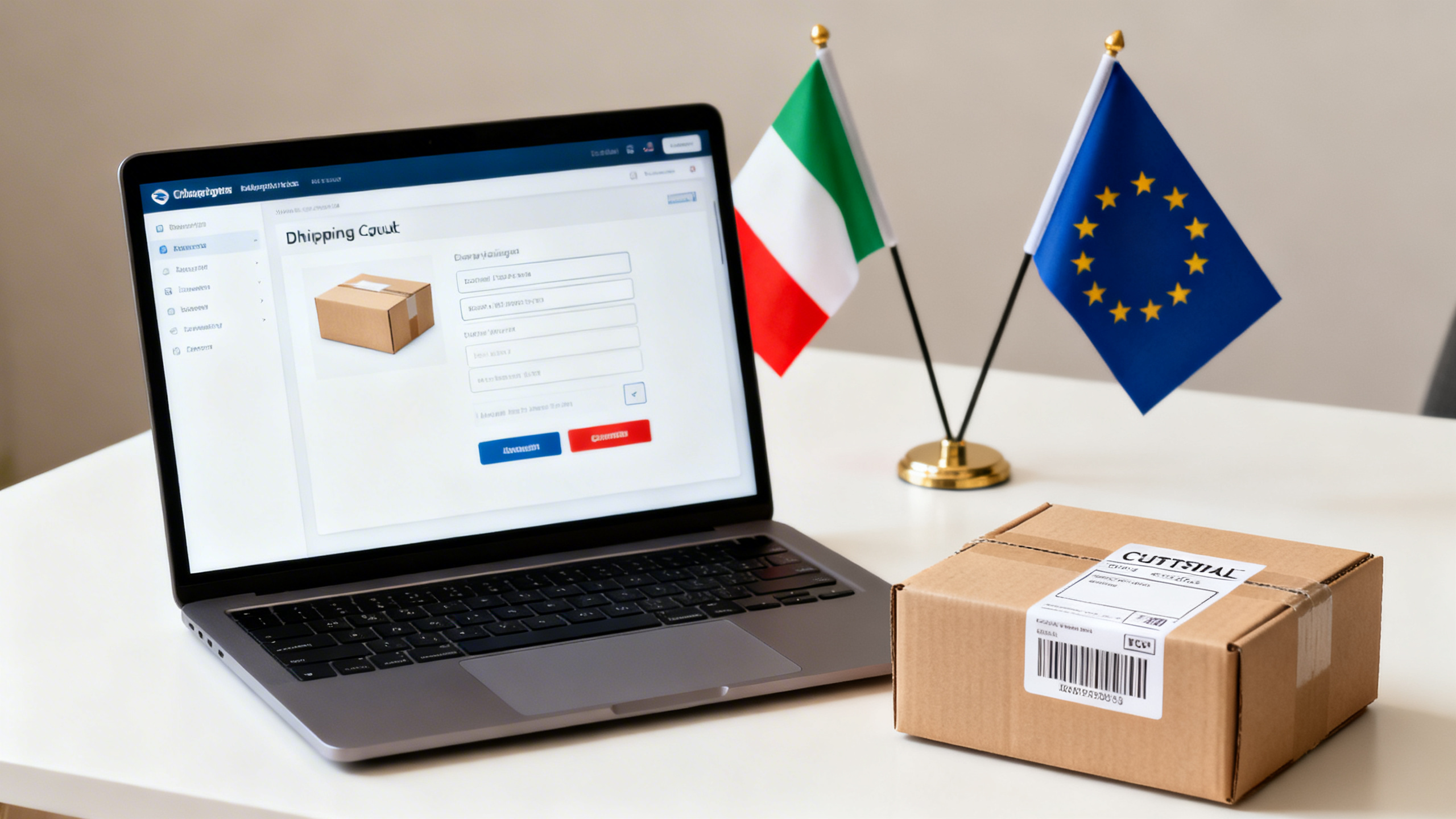
In late 2025, few EU compliance topics created more day‑to‑day operational risk for cross‑border sellers than the Italy CBD ban 2025 package tied to Decree‑Law No. 48 of 11 April 2025 (often described in reporting as a “Security Decree”). The practical effect for many businesses was immediate: Italy moved from “grey and manageable” to “high‑risk destination” for several hemp‑derived CBD product categories—especially ingestible formats and anything made from inflorescences (flowers).
This post explains what changed, why Brussels may get involved, and how to build an “e‑commerce risk map” for Q4 2025 that reduces seizures, payment disruptions, and downstream liability. It is informational only and not legal advice.
Italy’s 2025 measures were not merely another labeling tweak or THC threshold adjustment. Multiple sources describing the decree’s content report that Article 18 (and connected amendments) sharply restricted the production and marketing of industrial hemp inflorescences and derivatives—often described as including extracts, resins, and oils derived from flowers—while linking violations to Italy’s narcotics enforcement framework.
Key compliance consequences for sellers shipping into Italy in Q4 2025:
A parallel pressure point for ingestibles came from earlier Italian health‑sector actions. Trade‑law commentary and legal analysis in 2025 continued to cite litigation around the Italian Ministry of Health’s approach to oral compositions containing CBD extracted from hemp, with the TAR Lazio reportedly rejecting an appeal against a 2024 Ministry of Health decree and thereby reinforcing a restrictive posture for ingestible/oral CBD products.
Italy is part of the EU internal market. When a Member State bans or criminalizes the marketing of goods that are lawfully produced and marketed in another Member State, it raises immediate free movement of goods issues under the Treaty.
The legal reference point most often cited is the Court of Justice’s decision in Case C‑663/18 (Kanavape), where the Court held that CBD lawfully produced in one Member State could not be prohibited by another Member State through a blanket marketing ban unless the restriction is justified on public‑health grounds and is appropriate and proportionate.
Official text: https://eur-lex.europa.eu/legal-content/EN/TXT/?uri=celex:62018CJ0663
That proportionality test is exactly where Italy’s 2025 approach may be vulnerable: a near‑categorical ban focused on plant parts (inflorescences) and derivatives can be harder to defend if the Member State cannot show robust evidence that less restrictive measures (limits, standards, controlled channels) would not achieve the public‑health objective.
The internal‑market tension is heightened by the EU agricultural framework that recognizes certified hemp cultivation with a 0.3% THC ceiling for certain CAP purposes—often cited in policy debate to show that the EU treats low‑THC hemp as a legitimate agricultural product category.
Italy’s 2025 posture, by contrast, was perceived by industry as collapsing distinctions between low‑THC industrial hemp and high‑THC products.
A notable “Brussels signal” in 2025 was a European Parliament written question explicitly addressing Decree‑Law 48/2025 and asking the Commission whether criminalizing marketing of industrial hemp inflorescences and derivatives is compatible with EU law.
Source: https://www.europarl.europa.eu/doceo/document/E-10-2025-001571_EN.html
Parliamentary questions do not force Commission action, but they often indicate that the issue is politically salient and being monitored.
Businesses planning for Q4 2025 needed to understand a key reality: EU infringement action is not immediate relief.
In general, when the Commission believes a Member State is violating EU law, the process typically moves through:
Even when an infringement track begins, Member State enforcement can continue while litigation plays out.
Public reporting and NGO/trade‑press coverage indicated that complaints were filed and the Commission was assessing compatibility with internal‑market rules.
Additionally, in late 2025 there were reports that the Italian Council of State referred questions to the Court of Justice on the compatibility of the Italian ban on marketing hemp inflorescences/derivatives with EU law, reinforcing that the issue is moving toward EU‑level judicial scrutiny.
Example reporting: https://www.eunews.it/en/2025/11/12/eu-court-of-justice-to-rule-on-italian-ban-on-cbd-and-hemp-inflorescences/
From an operational standpoint, the key takeaway for Q4 2025 was: do not assume that “the EU will strike it down soon” equals low risk today.
To help sellers make shipping decisions, here is a practical risk map for Q4 2025. It is written for EU‑wide brands, marketplaces, and 3PLs managing multiple catalog types.
These categories carried the highest seizure and enforcement risk in late 2025:
Why: Italy’s 2025 framework and related health‑sector classification trends created a posture where these goods were more likely to be treated as prohibited or narcotics‑adjacent.
These categories were not always the center of the ban narrative but still presented elevated risk due to broad interpretations and customs discretion:
Mitigation: ensure product classification, ingredient specs, and claims are conservative and supported.
Even here, sellers should expect occasional scrutiny because parcel inspection decisions can be inconsistent.
If your company sold across the EU in 2025, Italy required special handling in the same way that certain “restricted destination” countries do for alcohol, nicotine, or medicines.
Implement destination‑based SKU suppression for Italy:
Be mindful of the EU Geo‑blocking Regulation (EU) 2018/302: the rule generally targets unjustified discrimination in access to interfaces and conditions, but it does not force you to deliver everywhere. Many merchants limit delivery countries for legitimate compliance reasons. Keep policies consistent, documented, and tied to regulatory risk.
Background: https://www.consilium.europa.eu/en/policies/geo-blocking/
Italy’s enforcement climate in 2025 made claims a multiplier of risk.
Actions:
At EU level, CBD ingestibles are widely treated as novel foods under Regulation (EU) 2015/2283 absent authorization.
The European Commission maintains a public page listing summary of applications and notifications for novel foods, including multiple CBD‑related applications.
For Q4 2025 compliance planning, sellers should assume:
Operationally: even if you believe your ingestible product has a viable novel food pathway, that does not neutralize Italy‑specific enforcement risk in late 2025.
For products you continue to ship (yellow/orange), standardize documents to reduce border friction:
Keep descriptions neutral and consistent across listing, invoice, and label. Inconsistency is a common seizure trigger.
If you operate a marketplace—or sell via one—remember that since 2024 the EU Digital Services Act increased expectations around trader traceability, notice‑and‑action, and illegal‑content response.
Italy’s 2025 ban made it easier for authorities or users to argue that certain listings were “illegal content” for Italy‑directed sales. Ensure your compliance workflow can:
A common mistake in late 2025 was interpreting “there are court challenges” as “enforcement is paused.” In practice:
For risk management, Q4 2025 should have been treated as a period where the strictest plausible interpretation was the safe operational assumption.
If your company chose to block Italy in Q4 2025, you still needed a re‑entry plan. Monitor:
A key nuance: even if Brussels pressures Italy, there can be a lag before on‑the‑ground enforcement changes.
Italy’s 2025 restrictions turned what had been a fragmented EU compliance landscape into a high‑stakes operational issue for cross‑border brands—especially those relying on direct‑to‑consumer shipping and marketplaces.
For ongoing monitoring, SKU‑level risk classification, and compliance workflow support across jurisdictions, use https://cannabisregulations.ai/ to keep your cannabis compliance, licensing, and regulations intelligence current and actionable.