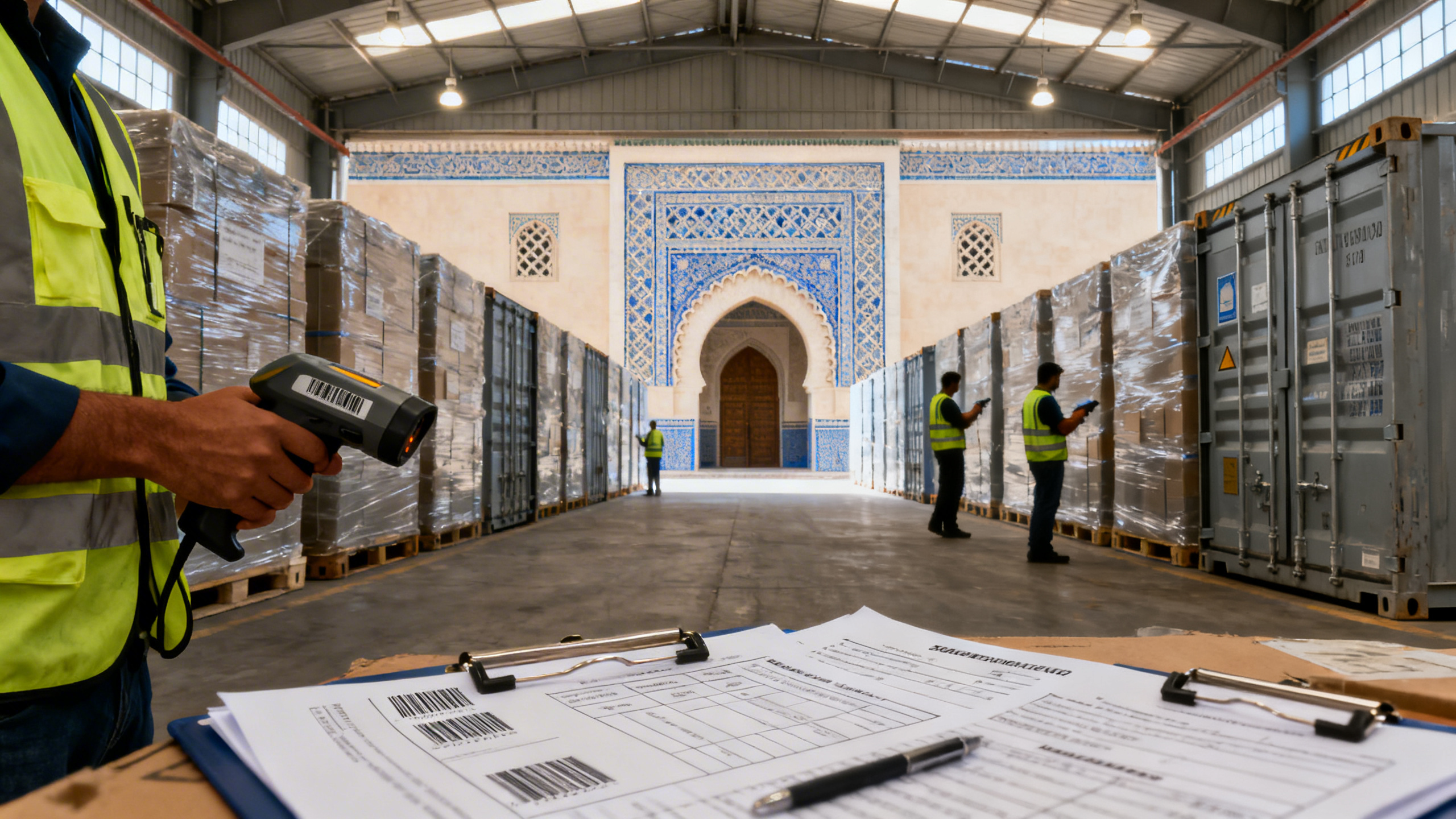

In 2025, Morocco’s regulated medical-and-industrial program crossed a threshold the global market had been watching for: first legal exports under the country’s post‑Law 13‑21 framework—and a fast‑expanding pipeline of authorized products.
By September 2025, Moroccan authorities publicly reported approvals for 60+ (often cited as “67”) regulated products, reflecting a shift from early licensing to real commercial execution across cultivation cooperatives, processing, quality systems, and export logistics. For operators, that scale-up also signals a new phase of scrutiny: Good Agricultural and Collection Practices (GACP) at farm level, GMP-aligned manufacturing, batch testing, and traceability/serialization that can stand up to EU and APAC import regimes.
This article breaks down what “export readiness” looks like in Morocco for 2025–2026, focusing on ANRAC approvals, export permit mechanics, product categories moving through authorization, cooperative onboarding, and the compliance controls Morocco is using to reduce diversion risk while competing on quality and cost.
Informational only; not legal advice. Always verify requirements with ANRAC and destination-country authorities.
Morocco’s regulated framework in 2025–2026: the compliance center of gravity is ANRAC
Morocco’s legal framework for regulated medical/industrial uses is anchored by Law 13‑21, implemented through decrees and administrative guidance. The operational regulator is the Agence Nationale de Réglementation des Activités relatives au Cannabis (ANRAC).
Key compliance reality for 2025–2026: ANRAC is not only a licensing body. It functions as the gatekeeper for the full lifecycle—cultivation authorization, movement controls, processing approvals, and export permissions—with an increasing emphasis on documented quality systems and auditable chain-of-custody.
External link: https://www.anrac.ma/
What changed in 2025
Three developments pushed Morocco from “framework” to “market”:
- Exports began under authorization, moving from domestic commissioning to international trade execution.
- Product approvals accelerated, with authorities reporting 67 approved products (often described as “cannabis-based products”) by September 2025.
- Licensed cultivation expanded via cooperatives, especially in traditional producing areas, but now under formal contracts, seed rules, and traceability.
The export permit mechanics: what an ANRAC-compliant export pathway looks like
Exporting from Morocco is not a single permit—it is typically a stack of approvals that must align across the Moroccan side and the destination-country import clearance.
At a high level, exporters should expect the process to resemble the following compliance sequence.
1) Ensure your license scope actually covers export-linked activities
Export readiness starts with licensing scope and site approvals. Depending on your role, ANRAC may require authorization for activities such as:
- Cultivation (often via cooperatives)
- Processing/manufacturing (extraction, refinement, formulation)
- Storage/warehousing
- Transport (secure movement, documented custody)
- Export (commercial exporter authorization and shipment-by-shipment permissions)
Practical takeaway: treat export as an extension of your licensed lifecycle. If your business model includes API, extract, or finished dose forms, ensure your authorizations and SOPs explicitly cover those operations.
2) Product authorization and intended market alignment
Where Morocco has reported 67 approved products, businesses should interpret “product approvals” as an ANRAC-controlled pathway that can vary by category (for example, bulk inputs vs finished forms).
Exporters should validate:
- Exact product category authorized (API, extract, intermediate, finished form)
- Specifications and release criteria (purity, potency range, contaminants)
- Labeling and language requirements for the export market
- Stability/shelf-life data expectations for the dosage form
If the destination market is the EU, the product authorization strategy must also map to EU expectations around GMP manufacturing, QP batch certification (where applicable), and local narcotics import rules.
3) Demonstrate GACP at farm level and GMP-aligned controls in processing
Destination markets increasingly treat “medical supply chain” credibility as a GACP → GMP continuity story.
GACP expectations (cultivation and collection)
Export-linked cultivation should demonstrate:
- Authorized genetics/seed sourcing and controlled distribution
- Crop registration tied to cooperative plots and farmer identifiers
- Controlled inputs (fertilizers, pesticides) consistent with residue limits
- Harvest/curing SOPs to reduce microbial load and variability
- Secure storage and documented handoff to processors
GMP expectations (processing and manufacturing)
For extracts, APIs, and finished forms, buyers and import authorities often require:
- Qualified premises and equipment
- Validated cleaning and cross-contamination controls
- Process validation (especially for extraction/refinement)
- Quality management system (QMS) with deviations/CAPA
- Document control and batch records that reconcile yield and losses
Note: “GMP” can mean different levels depending on destination (national GMP vs EU-GMP). If you are selling into the EU supply chain, buyers will typically expect EU‑GMP alignment for manufacturing sites, and GACP for cultivation.
4) Batch testing and Certificate of Analysis (CoA) discipline
Export shipments live or die by batch release.
A compliant export dossier typically includes:
- Batch identification linked to traceability/serialization
- Sampling SOP (representative, tamper-evident)
- CoA covering potency/assay and contaminants
- Microbiology results appropriate to product type
- Residual solvents (for extracts)
- Heavy metals and pesticide residues
Even if Morocco’s domestic minimums differ by category, destination-country importers often impose their own specifications. For 2025–2026, exporters should assume that EU buyers will benchmark against European Pharmacopeia concepts and local narcotics-medical frameworks.
5) Traceability and serialization duties for shipments
Morocco’s diversion-control strategy relies heavily on chain-of-custody and trackable inventory.
Exporters should plan for:
- Unique identifiers at batch and package level
- Reconciliation of harvested weight → processed input → output yields
- Secure transport logs with custody signatures and time stamps
- Tamper-evident packaging and sealed containers for export consignments
- Shipment dossiers retained for audit, including manifests and CoAs
Even when the destination market does not mandate a specific serialization schema, buyers increasingly request serialization-compatible packaging and digital traceability to support downstream compliance.
6) Destination-country import clearance is not optional—and should be obtained early
One of the most common export failures globally is treating import clearance as “the buyer’s problem.” In regulated medical channels, it is a shared compliance requirement.
Exporters should require documented evidence of:
- Import permit or controlled-substance authorization in the destination
- Local wholesaler/handler licenses
- Pre-shipment approvals if required by the importing authority
- Customs classification and documentation alignment
In the EU, many supply chains require Qualified Person (QP) batch certification before release to market, which influences what documentation must accompany the shipment.
What are the “67 approved products”? Understanding product categories and what they mean for licensing and QA
Public reporting in 2025 referenced approvals for 60+ / 67 products. While the exact list and category breakdown should be validated directly with ANRAC communications, operators should understand the typical “regulated product ladder” in emerging export markets.
Likely authorized categories in a scaling medical/industrial program
Businesses should expect authorizations to cluster into:
- Active Pharmaceutical Ingredients (API): purified cannabinoids or standardized active substances intended for pharmaceutical manufacturing.
- Extracts and distillates: full-spectrum or broad-spectrum extracts, distillates, and refined intermediates used for further formulation.
- Finished dosage forms: oils, capsules, oral solutions, or other patient-ready forms where permitted by regulation and aligned to import rules.
- Industrial derivatives: non-medical, industrial uses where authorized (e.g., fiber/seed derivatives), subject to separate standards.
Why category matters (and why compliance differs)
The compliance gap between categories is significant:
- APIs demand the strongest GMP, validated methods, impurity profiling, and stability.
- Extracts demand strict residual solvent and contaminant controls, plus process validation.
- Finished forms demand full labeling, dosing uniformity, stability programs, and often pharmacovigilance expectations in the destination market.
For 2025–2026, Morocco’s competitive edge will depend on how quickly operators can produce consistent, specification-driven outputs at scale.
Cooperative onboarding: how licensed cultivation is being organized (and what farms must document)
Morocco’s model relies heavily on licensed cultivation through farmer cooperatives, particularly in traditional growing regions. For compliance leaders, cooperative integration is both a supply opportunity and a systems challenge.
What cooperative onboarding typically requires
Operators working with cooperatives should expect requirements such as:
- Cooperative licensing/recognition within the ANRAC framework
- Farmer enrollment with identity verification and plot registration
- Land/plot documentation (location, boundaries, authorized area)
- Seed/planting material allocation from approved sources
- Training records on GACP, handling, hygiene, and security
Contract farming standards: the “export-grade” version
To support export, contract farming arrangements should include compliance clauses covering:
- Input controls (approved agrochemicals only; documentation of applications)
- Harvest windows and moisture targets
- Post-harvest handling and storage conditions
- Delivery and acceptance criteria (quality specs and rejection handling)
- Payment structure that discourages side-selling (a key diversion risk)
- Audit rights for the processor/exporter
Practical takeaway: If you cannot audit it, you cannot export it. Contract farming must be written to allow field inspections, sampling, and corrective actions.
Diversion risk controls: what buyers and regulators will look for in 2025–2026
Because Morocco is competing against established exporters, buyers will evaluate not only price and quality, but also the integrity of the supply chain.
Typical diversion-control expectations
Programs seeking international credibility commonly implement:
- Licensed-only cultivation with registered farmers and defined hectares
- Controlled genetics and planting material distribution
- Movement permits for raw material and intermediates
- Inventory reconciliation with yield expectations and loss reporting
- Secure warehousing and restricted access
- Incident reporting and enforcement cooperation
For exporters, diversion controls are not merely “security.” They’re a documented compliance narrative that convinces importers, banks, insurers, and regulators that Moroccan supply can be trusted.
Competing in EU and APAC markets: quality systems are the differentiator
Morocco has potential structural advantages: proximity to Europe, agricultural experience, and the ability to organize cultivation through cooperatives. But EU and many APAC channels are unforgiving on quality systems.
EU-facing readiness priorities
If your target is the EU (directly or via EU-linked supply chains), prioritize:
- GACP-aligned cultivation with auditable farm records
- EU‑GMP-aligned manufacturing (or a clear pathway to it)
- Analytical method validation and robust stability programs
- Change control for genetics, process parameters, and packaging
- Release documentation that supports QP review
External context link (EU GMP baseline): https://health.ec.europa.eu/medicinal-products/eudralex/eudralex-volume-4_en
APAC-facing considerations
APAC markets vary widely. Many require:
- Stricter import approvals and pre-shipment documentation
- Country-specific labeling and product registration
- Strong contaminant limits and validated test methods
The operational lesson: design your QMS for the most stringent target market you plan to serve.
Use this as an internal readiness guide for export operations.
Licensing and governance
- Confirm ANRAC license scope for each activity in your supply chain
- Maintain organizational charts, responsible person roles, and training
Quality systems
- Implement document control, deviations, CAPA, and change control
- Validate critical processes (extraction/refinement/formulation)
Testing and release
- Establish qualified laboratories and sampling procedures
- Standardize CoA format and batch release decision rules
Traceability and shipping
- Build serialization at batch/package levels
- Maintain movement/transfer records from farm to export
- Prepare export dossiers that align with importer requirements
Cooperative and farmer management
- Keep plot registry and farmer onboarding documentation current
- Run GACP training and seasonal audits
- Enforce contract standards and side-selling deterrence mechanisms
Key takeaways
- Morocco’s 2025 performance—first legal exports and reported 67 approved products—signals that the market is moving into an execution phase where compliance documentation matters as much as licensing.
- Export success depends on aligning ANRAC approvals with destination-country rules, especially around GACP, GMP, batch testing, and import permits.
- The cooperative model can scale quickly, but only if operators treat farms like regulated suppliers: contracts, audits, training, and traceability.
- Diversion risk management is becoming a commercial requirement; buyers want auditable controls, not promises.
Keep your compliance export-ready with CannabisRegulations.ai
If you’re building or investing in Morocco’s regulated supply chain, the winning edge in 2025–2026 will be a repeatable compliance system: licensing coverage, product authorization strategy, GACP/GMP readiness, batch documentation, and shipment traceability.
Use https://cannabisregulations.ai/ to track regulatory updates, build compliant SOP frameworks, and pressure-test your export dossiers before they hit ANRAC review or destination-country import clearance.