

July 21, 2026


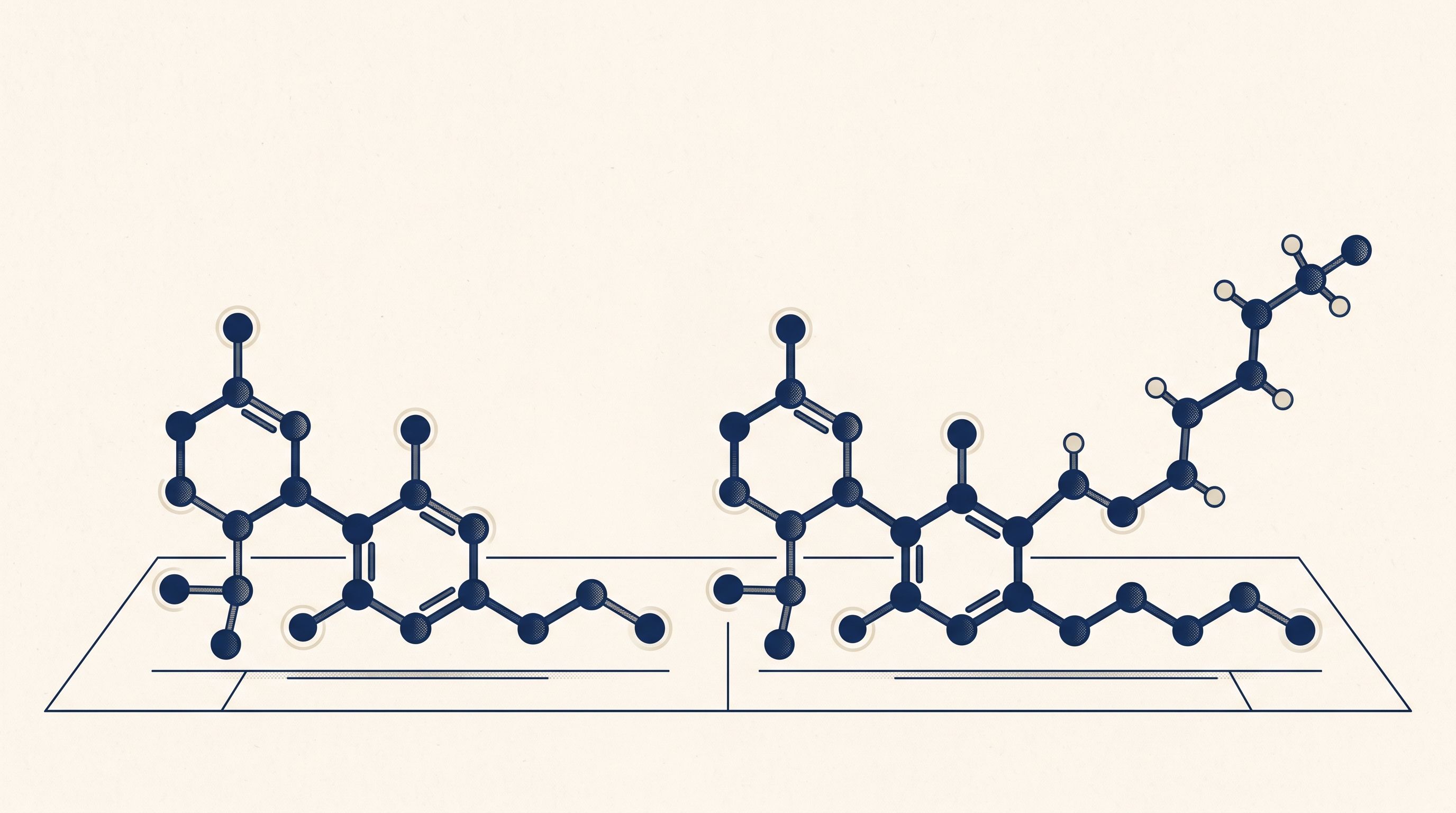
THCA and Delta-8 THC are the two cannabinoids that built the intoxicating-hemp market, and they reached it from opposite directions: one is the raw, non-intoxicating acid the cannabis plant actually grows; the other is a converted compound manufactured from CBD. The law treats them differently today — and the federal definition change taking effect November 12, 2026 treats them almost identically. Here is the comparison operators and buyers actually need.
THCA (tetrahydrocannabinolic acid) is the precursor acid that raw cannabis produces in abundance. It is not intoxicating in its raw form. Heat it — smoking, vaping, baking — and it decarboxylates into Delta-9 THC. "THCA flower" is, functionally, cannabis flower marketed on the fact that pre-heat lab numbers show low Delta-9.
Delta-8 THC is a minor cannabinoid that occurs naturally only in trace amounts. Commercial Delta-8 is manufactured by chemically converting hemp-derived CBD. It is intoxicating — typically described as milder than Delta-9 — and it exists as a mass-market product only because of how the 2018 Farm Bill defined hemp.
Both compounds currently trade under the 2018 Farm Bill's definition of hemp, which measures only Delta-9 THC at 0.3 percent by dry weight. Raw THCA flower can test under that line while converting to potent THC when heated; Delta-8 escapes the definition because it is not Delta-9 at all. Both readings have been contested — DEA has said interstate hemp must be measured post-decarboxylation for THCA, and several courts have weighed Delta-8's status — but the commercial market has operated through the gap.
That gap closes on November 12, 2026. The new federal standard redefines hemp using total THC — capturing THCA — and imposes a 0.4 mg total-THC-per-container cap on finished products. Most THCA flower and most Delta-8 products fail both tests. The mechanics are covered in our guide to the 0.4 mg federal container cap. The practical difference between the two compounds, federally, is about to shrink to zero.
The state patchwork is where the two diverge. Delta-8 is the more widely banned or restricted compound: a substantial number of states prohibit or cap converted (synthesized) cannabinoids specifically, on the reasoning that CBD-to-Delta-8 conversion is synthetic. THCA is more often policed through testing standards: states adopting total-THC or post-decarboxylation testing capture THCA flower without naming it. Some states allow one and not the other; the combinations shift session by session. Rather than freeze a table that will be stale in a quarter, cross-reference both compounds by state in the state legality database, and see THCA legality state by state for the deeper THCA treatment.
The regulatory hinge for THCA is arithmetic: total THC = Delta-9 + (0.877 × THCA). Jurisdictions using that formula — or requiring post-decarboxylation testing — treat most THCA flower as marijuana. Jurisdictions testing only pre-heat Delta-9 leave the market open. For Delta-8, the hinge is categorical: whether the state's law reaches "synthetic" or "converted" cannabinoids. Enforcement follows the same split — THCA cases tend to turn on lab methodology; Delta-8 cases on statutory interpretation.
Neither compound offers any safety margin for tested employees. Heated THCA is Delta-9 THC, full stop. Delta-8 metabolizes into THC metabolites that standard immunoassay panels detect without distinguishing the source. "It was legal hemp" is not a defense to a positive result under most workplace policies.
Both product categories face the same operational questions: carrier acceptance, age gating, and destination-state law — walked through in our guide to shipping hemp THC products across state lines. Between now and November 12, the planning question for brands in either category is identical: which SKUs survive a 0.4 mg total-THC container cap, and what does the catalog look like after. For how the comparison plays out against other cannabinoids, see Delta-8 vs Delta-9 and HHC vs Delta-8.
Both currently trade under the 2018 hemp definition, but the November 12, 2026 total-THC standard and 0.4 mg container cap will disqualify most products of both types.
Both can produce THC metabolites; standard panels do not distinguish the source.
The patchwork shifts frequently — the state legality database cross-references both by state.
Raw THCA is non-intoxicating; once heated it converts to Delta-9 THC, which is generally more potent than Delta-8.
The federal hemp definition moves to total THC with a 0.4 mg per-container cap, ending the loophole both compounds rely on.
THCA and Delta-8 THC are the two cannabinoids that built the intoxicating-hemp market, and they reached it from opposite directions: one is the raw, non-intoxicating acid the cannabis plant actually grows; the other is a converted compound manufactured from CBD. The law treats them differently today — and the federal definition change taking effect November 12, 2026 treats them almost identically. Here is the comparison operators and buyers actually need.
THCA (tetrahydrocannabinolic acid) is the precursor acid that raw cannabis produces in abundance. It is not intoxicating in its raw form. Heat it — smoking, vaping, baking — and it decarboxylates into Delta-9 THC. "THCA flower" is, functionally, cannabis flower marketed on the fact that pre-heat lab numbers show low Delta-9.
Delta-8 THC is a minor cannabinoid that occurs naturally only in trace amounts. Commercial Delta-8 is manufactured by chemically converting hemp-derived CBD. It is intoxicating — typically described as milder than Delta-9 — and it exists as a mass-market product only because of how the 2018 Farm Bill defined hemp.
Both compounds currently trade under the 2018 Farm Bill's definition of hemp, which measures only Delta-9 THC at 0.3 percent by dry weight. Raw THCA flower can test under that line while converting to potent THC when heated; Delta-8 escapes the definition because it is not Delta-9 at all. Both readings have been contested — DEA has said interstate hemp must be measured post-decarboxylation for THCA, and several courts have weighed Delta-8's status — but the commercial market has operated through the gap.
That gap closes on November 12, 2026. The new federal standard redefines hemp using total THC — capturing THCA — and imposes a 0.4 mg total-THC-per-container cap on finished products. Most THCA flower and most Delta-8 products fail both tests. The mechanics are covered in our guide to the 0.4 mg federal container cap. The practical difference between the two compounds, federally, is about to shrink to zero.
The state patchwork is where the two diverge. Delta-8 is the more widely banned or restricted compound: a substantial number of states prohibit or cap converted (synthesized) cannabinoids specifically, on the reasoning that CBD-to-Delta-8 conversion is synthetic. THCA is more often policed through testing standards: states adopting total-THC or post-decarboxylation testing capture THCA flower without naming it. Some states allow one and not the other; the combinations shift session by session. Rather than freeze a table that will be stale in a quarter, cross-reference both compounds by state in the state legality database, and see THCA legality state by state for the deeper THCA treatment.
The regulatory hinge for THCA is arithmetic: total THC = Delta-9 + (0.877 × THCA). Jurisdictions using that formula — or requiring post-decarboxylation testing — treat most THCA flower as marijuana. Jurisdictions testing only pre-heat Delta-9 leave the market open. For Delta-8, the hinge is categorical: whether the state's law reaches "synthetic" or "converted" cannabinoids. Enforcement follows the same split — THCA cases tend to turn on lab methodology; Delta-8 cases on statutory interpretation.
Neither compound offers any safety margin for tested employees. Heated THCA is Delta-9 THC, full stop. Delta-8 metabolizes into THC metabolites that standard immunoassay panels detect without distinguishing the source. "It was legal hemp" is not a defense to a positive result under most workplace policies.
Both product categories face the same operational questions: carrier acceptance, age gating, and destination-state law — walked through in our guide to shipping hemp THC products across state lines. Between now and November 12, the planning question for brands in either category is identical: which SKUs survive a 0.4 mg total-THC container cap, and what does the catalog look like after. For how the comparison plays out against other cannabinoids, see Delta-8 vs Delta-9 and HHC vs Delta-8.
Both currently trade under the 2018 hemp definition, but the November 12, 2026 total-THC standard and 0.4 mg container cap will disqualify most products of both types.
Both can produce THC metabolites; standard panels do not distinguish the source.
The patchwork shifts frequently — the state legality database cross-references both by state.
Raw THCA is non-intoxicating; once heated it converts to Delta-9 THC, which is generally more potent than Delta-8.
The federal hemp definition moves to total THC with a 0.4 mg per-container cap, ending the loophole both compounds rely on.
