
July 8, 2026

Thank you! Your submission has been received!
Oops! Something went wrong while submitting the form.

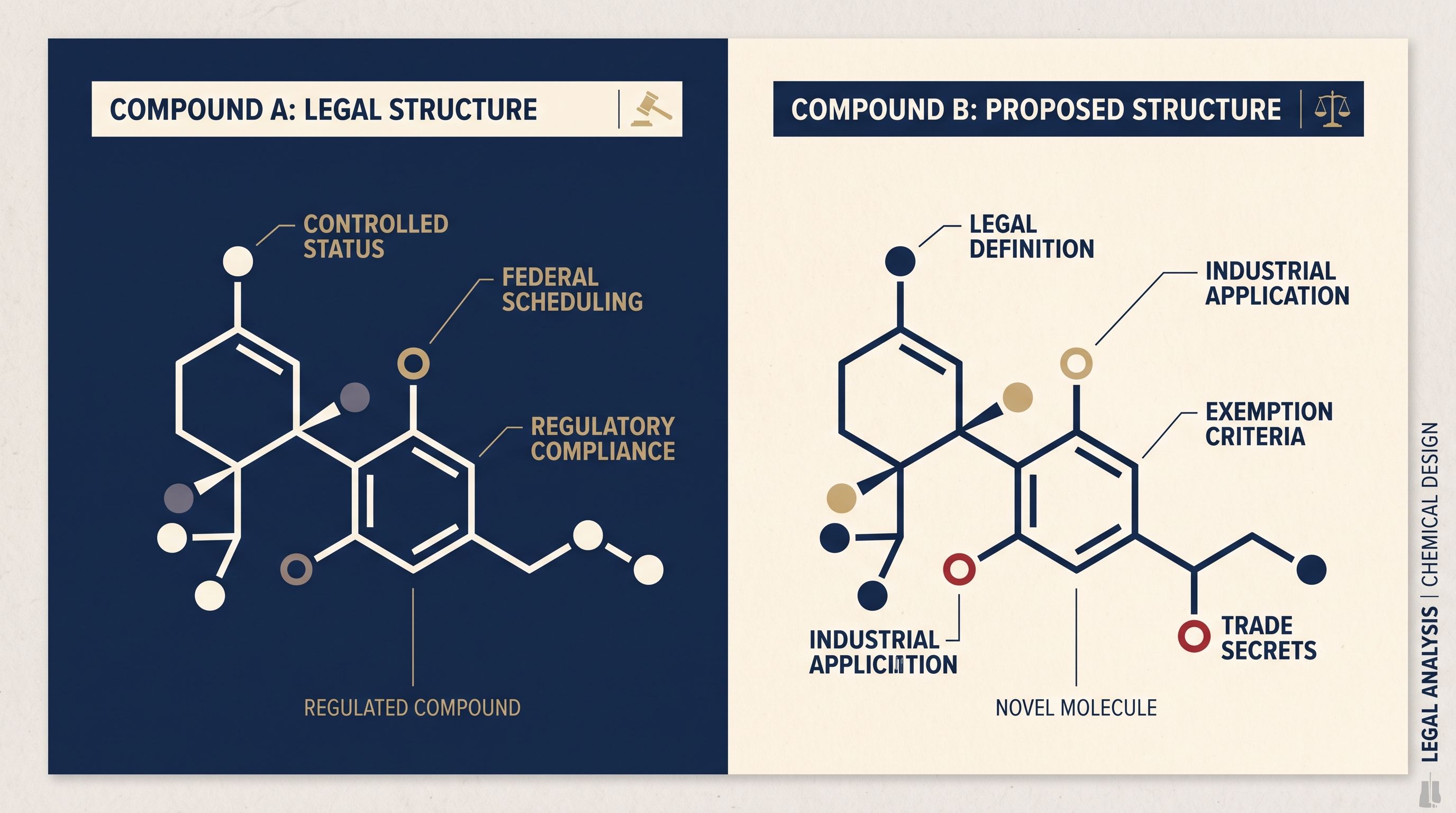
HHC vs Delta-8 in one paragraph: Both are intoxicating cannabinoids sold outside licensed dispensaries, but as of 2026 they sit in different legal worlds. HHC (hexahydrocannabinol) is now a specifically listed Schedule I controlled substance federally — the DEA finalized its listing in May 2026 — while Delta-8 THC's federal status remains contested territory under the 2018 Farm Bill until the November 2026 hemp redefinition closes the question for most products. Chemically, HHC is a hydrogenated form of THC; Delta-8 is a THC isomer usually converted from hemp-derived CBD. Legally, one is banned by name; the other is being squeezed out by math.
HHC lost its gray-zone status this year. The DEA's specific listing for hexahydrocannabinol took effect in May 2026, formalizing the agency's position that HHC was already controlled as a Schedule I substance. Industry groups have sued, and the DEA is defending the listing against those challenges — we've covered the litigation in detail in our HHC Schedule I lawsuit tracker. Unless a court intervenes, selling HHC products is federal drug distribution, full stop.
Delta-8 occupies the more familiar contested ground. Sellers point to the 2018 Farm Bill's definition of hemp (all derivatives below 0.3 percent delta-9 THC); DEA and several courts have disagreed about synthetically converted cannabinoids, most notably in the Eighth Circuit's Arkansas ruling. No federal rule bans Delta-8 by name — its exposure is definitional, and it changes in November (below).
For how each compares against ordinary THC, see our companion guides: HHC vs THC, Delta-8 vs Delta-9, and THCA vs Delta-9.
| HHC | Delta-8 THC | |
|---|---|---|
| Origin | Hydrogenated THC, typically made from hemp CBD | THC isomer, typically converted from hemp CBD |
| Intoxicating? | Yes — commonly reported as near delta-9 potency | Yes — commonly reported as milder than delta-9 |
| Federal status (2026) | Schedule I by specific listing (May 2026); litigation pending | Contested; no specific listing; Farm Bill argument narrows sharply Nov 12, 2026 |
| State treatment | Banned or unaddressed in most states; few explicit carve-outs | Patchwork: banned in some states, regulated in others, unrestricted in a shrinking few |
| Drug testing | Metabolites can trigger standard THC positives | Metabolites can trigger standard THC positives |
States never waited for federal clarity. Delta-8 is banned or restricted in a growing majority of states, with 2026 additions including Illinois's omnibus restrictions and Tennessee's July 1 ban. HHC, despite less legislative attention by name, is frequently captured by state "synthetic cannabinoid" or total-THC definitions. The practical rule for retailers: check both the named-substance lists and the definitional math in every state you ship to.
Neither cannabinoid is distinguishable from marijuana use on a standard workplace drug panel — both metabolize into compounds that trigger THC-positive results. On enforcement: HHC's specific listing gives DEA a clean predicate for action against manufacturers and distributors, while Delta-8 enforcement has historically run through state attorneys general, FDA warning letters on marketing claims, and private litigation rather than federal drug prosecutions.
The federal hemp redefinition — analyzed in the Congressional Research Service's brief — takes effect November 12, 2026. It caps total THC at 0.4 milligrams per container for finished hemp-derived products intended for consumption. For Delta-8, that ends the Farm Bill argument for virtually all intoxicating products: the definitional loophole closes regardless of how the isomer was made. For HHC, the redefinition is largely moot — the Schedule I listing already controls. After November, the two cannabinoids converge on the same practical answer: intoxicating doses are outside the legal hemp market.
Federally, no — DEA's specific Schedule I listing took effect in May 2026. Industry challenges are pending in federal court. State rules vary but rarely rescue it.
Contested. Sellers rely on the 2018 Farm Bill; DEA and several courts disagree on synthesized products. The November 12, 2026 redefinition caps total THC at 0.4 mg per container, ending the argument for most intoxicating products.
Users generally report HHC as closer to delta-9 in potency and Delta-8 as milder — though products vary widely and neither is FDA-evaluated.
Both can trigger THC-metabolite positives. No standard workplace panel distinguishes them from marijuana use.
The federal hemp redefinition takes effect, capping total THC at 0.4 mg per container for finished hemp products — reshaping both markets and mooting most of the current legal debate.
This article is for informational purposes only and is not legal advice. Consult your counsel before making product or compliance decisions.
HHC vs Delta-8 in one paragraph: Both are intoxicating cannabinoids sold outside licensed dispensaries, but as of 2026 they sit in different legal worlds. HHC (hexahydrocannabinol) is now a specifically listed Schedule I controlled substance federally — the DEA finalized its listing in May 2026 — while Delta-8 THC's federal status remains contested territory under the 2018 Farm Bill until the November 2026 hemp redefinition closes the question for most products. Chemically, HHC is a hydrogenated form of THC; Delta-8 is a THC isomer usually converted from hemp-derived CBD. Legally, one is banned by name; the other is being squeezed out by math.
HHC lost its gray-zone status this year. The DEA's specific listing for hexahydrocannabinol took effect in May 2026, formalizing the agency's position that HHC was already controlled as a Schedule I substance. Industry groups have sued, and the DEA is defending the listing against those challenges — we've covered the litigation in detail in our HHC Schedule I lawsuit tracker. Unless a court intervenes, selling HHC products is federal drug distribution, full stop.
Delta-8 occupies the more familiar contested ground. Sellers point to the 2018 Farm Bill's definition of hemp (all derivatives below 0.3 percent delta-9 THC); DEA and several courts have disagreed about synthetically converted cannabinoids, most notably in the Eighth Circuit's Arkansas ruling. No federal rule bans Delta-8 by name — its exposure is definitional, and it changes in November (below).
For how each compares against ordinary THC, see our companion guides: HHC vs THC, Delta-8 vs Delta-9, and THCA vs Delta-9.
| HHC | Delta-8 THC | |
|---|---|---|
| Origin | Hydrogenated THC, typically made from hemp CBD | THC isomer, typically converted from hemp CBD |
| Intoxicating? | Yes — commonly reported as near delta-9 potency | Yes — commonly reported as milder than delta-9 |
| Federal status (2026) | Schedule I by specific listing (May 2026); litigation pending | Contested; no specific listing; Farm Bill argument narrows sharply Nov 12, 2026 |
| State treatment | Banned or unaddressed in most states; few explicit carve-outs | Patchwork: banned in some states, regulated in others, unrestricted in a shrinking few |
| Drug testing | Metabolites can trigger standard THC positives | Metabolites can trigger standard THC positives |
States never waited for federal clarity. Delta-8 is banned or restricted in a growing majority of states, with 2026 additions including Illinois's omnibus restrictions and Tennessee's July 1 ban. HHC, despite less legislative attention by name, is frequently captured by state "synthetic cannabinoid" or total-THC definitions. The practical rule for retailers: check both the named-substance lists and the definitional math in every state you ship to.
Neither cannabinoid is distinguishable from marijuana use on a standard workplace drug panel — both metabolize into compounds that trigger THC-positive results. On enforcement: HHC's specific listing gives DEA a clean predicate for action against manufacturers and distributors, while Delta-8 enforcement has historically run through state attorneys general, FDA warning letters on marketing claims, and private litigation rather than federal drug prosecutions.
The federal hemp redefinition — analyzed in the Congressional Research Service's brief — takes effect November 12, 2026. It caps total THC at 0.4 milligrams per container for finished hemp-derived products intended for consumption. For Delta-8, that ends the Farm Bill argument for virtually all intoxicating products: the definitional loophole closes regardless of how the isomer was made. For HHC, the redefinition is largely moot — the Schedule I listing already controls. After November, the two cannabinoids converge on the same practical answer: intoxicating doses are outside the legal hemp market.
Federally, no — DEA's specific Schedule I listing took effect in May 2026. Industry challenges are pending in federal court. State rules vary but rarely rescue it.
Contested. Sellers rely on the 2018 Farm Bill; DEA and several courts disagree on synthesized products. The November 12, 2026 redefinition caps total THC at 0.4 mg per container, ending the argument for most intoxicating products.
Users generally report HHC as closer to delta-9 in potency and Delta-8 as milder — though products vary widely and neither is FDA-evaluated.
Both can trigger THC-metabolite positives. No standard workplace panel distinguishes them from marijuana use.
The federal hemp redefinition takes effect, capping total THC at 0.4 mg per container for finished hemp products — reshaping both markets and mooting most of the current legal debate.
This article is for informational purposes only and is not legal advice. Consult your counsel before making product or compliance decisions.