

August 5, 2026


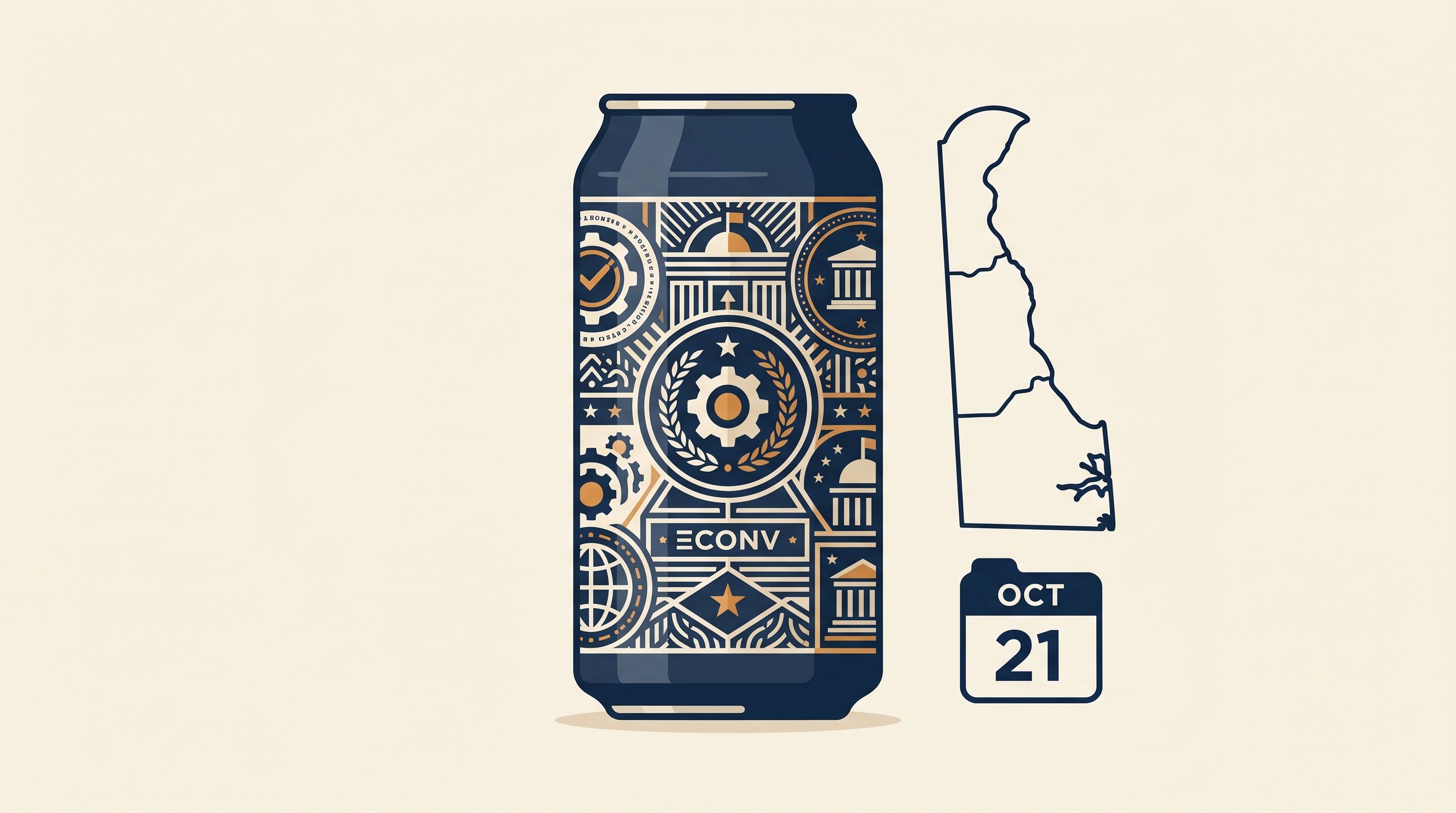
Delaware Gov. Matt Meyer signed House Bill 373 in late July, making Delaware the first East Coast state to build a full regulate-and-tax framework for hemp-derived THC beverages. The drinks will be sold through licensed marijuana dispensaries and liquor stores, with most provisions taking effect October 21, 2026.
HB 373 restricts hemp THC beverage sales to adults 21 and older and sets potency ceilings by format: 10 milligrams of delta-9 THC per single-serving container, 60 milligrams per multi-serving package, and up to 170 milligrams for 750 milliliter bottles. Products must meet state packaging, labeling, advertising, testing, sampling and safety standards.
The tax structure is excise-style rather than percentage-based: 50 cents per single-serving drink and $8.50 per 750 milliliter bottle. The tax provisions start later than the rest of the law, on February 1, 2027.
The notable design choice is distribution. THC drinks may be sold to consumers only at licensed liquor stores or licensed marijuana dispensaries, and certain licensed microbreweries will be allowed to manufacture and sell the beverages after receiving state authorization. That mirrors Minnesota's liquor-channel approach more than the dispensary-only model most marijuana states default to — and it hands Delaware's existing alcohol retail infrastructure a new product category. Delaware first sketched this direction in 2025; our earlier HB 98 coverage tracks how the framework evolved into this law.
For beverage brands and Delaware retailers, the window between now and October 21 is the licensing and compliance runway:
Delaware joins a small set of states that decided to regulate hemp THC drinks rather than ban them. Minnesota pioneered the liquor-store lane; Texas, even after its July 31 recriminalization of most hemp THC products, left low-dose delta-9 beverages as the surviving lane. The unresolved question for all of them is federal: absent congressional action, the hemp redefinition taking effect November 12 would limit legal products to 0.4 milligrams of total THC per container — far below Delaware's 10 milligram serving cap. Senate appropriators included provisions in a new spending bill to delay that ban, but the delay is a proposal, not law. See our coverage of the November 12 federal hemp deadline for where that fight stands.
Most of HB 373 takes effect October 21, 2026; taxes begin February 1, 2027. Delaware regulators still need to stand up licensing and testing mechanics before the effective date. And the November 12 federal standard remains the swing variable — a state license does not immunize a product from a federal definition change. Brands moving product across state lines should also note the practical rules in our guide to flying with THC drinks.
Yes. Under HB 373, signed in late July 2026, hemp-derived THC beverages are legal for adults 21 and older and will be regulated and taxed, with most provisions effective October 21, 2026.
Only through licensed marijuana dispensaries and liquor stores, plus certain licensed microbreweries that receive state authorization to manufacture and sell them.
Up to 10 mg of delta-9 THC per single-serving container, 60 mg per multi-serving package, and 170 mg for 750 ml bottles.
Potentially — absent congressional action, the federal 0.4 mg per-container standard would reach most hemp THC beverages regardless of state law. A Senate spending bill proposes delaying the ban, but it has not passed. Talk to your counsel.
This page is informational, not legal advice. Verify with a Delaware-licensed attorney before acting.
Delaware Gov. Matt Meyer signed House Bill 373 in late July, making Delaware the first East Coast state to build a full regulate-and-tax framework for hemp-derived THC beverages. The drinks will be sold through licensed marijuana dispensaries and liquor stores, with most provisions taking effect October 21, 2026.
HB 373 restricts hemp THC beverage sales to adults 21 and older and sets potency ceilings by format: 10 milligrams of delta-9 THC per single-serving container, 60 milligrams per multi-serving package, and up to 170 milligrams for 750 milliliter bottles. Products must meet state packaging, labeling, advertising, testing, sampling and safety standards.
The tax structure is excise-style rather than percentage-based: 50 cents per single-serving drink and $8.50 per 750 milliliter bottle. The tax provisions start later than the rest of the law, on February 1, 2027.
The notable design choice is distribution. THC drinks may be sold to consumers only at licensed liquor stores or licensed marijuana dispensaries, and certain licensed microbreweries will be allowed to manufacture and sell the beverages after receiving state authorization. That mirrors Minnesota's liquor-channel approach more than the dispensary-only model most marijuana states default to — and it hands Delaware's existing alcohol retail infrastructure a new product category. Delaware first sketched this direction in 2025; our earlier HB 98 coverage tracks how the framework evolved into this law.
For beverage brands and Delaware retailers, the window between now and October 21 is the licensing and compliance runway:
Delaware joins a small set of states that decided to regulate hemp THC drinks rather than ban them. Minnesota pioneered the liquor-store lane; Texas, even after its July 31 recriminalization of most hemp THC products, left low-dose delta-9 beverages as the surviving lane. The unresolved question for all of them is federal: absent congressional action, the hemp redefinition taking effect November 12 would limit legal products to 0.4 milligrams of total THC per container — far below Delaware's 10 milligram serving cap. Senate appropriators included provisions in a new spending bill to delay that ban, but the delay is a proposal, not law. See our coverage of the November 12 federal hemp deadline for where that fight stands.
Most of HB 373 takes effect October 21, 2026; taxes begin February 1, 2027. Delaware regulators still need to stand up licensing and testing mechanics before the effective date. And the November 12 federal standard remains the swing variable — a state license does not immunize a product from a federal definition change. Brands moving product across state lines should also note the practical rules in our guide to flying with THC drinks.
Yes. Under HB 373, signed in late July 2026, hemp-derived THC beverages are legal for adults 21 and older and will be regulated and taxed, with most provisions effective October 21, 2026.
Only through licensed marijuana dispensaries and liquor stores, plus certain licensed microbreweries that receive state authorization to manufacture and sell them.
Up to 10 mg of delta-9 THC per single-serving container, 60 mg per multi-serving package, and 170 mg for 750 ml bottles.
Potentially — absent congressional action, the federal 0.4 mg per-container standard would reach most hemp THC beverages regardless of state law. A Senate spending bill proposes delaying the ban, but it has not passed. Talk to your counsel.
This page is informational, not legal advice. Verify with a Delaware-licensed attorney before acting.
