


August 5, 2026


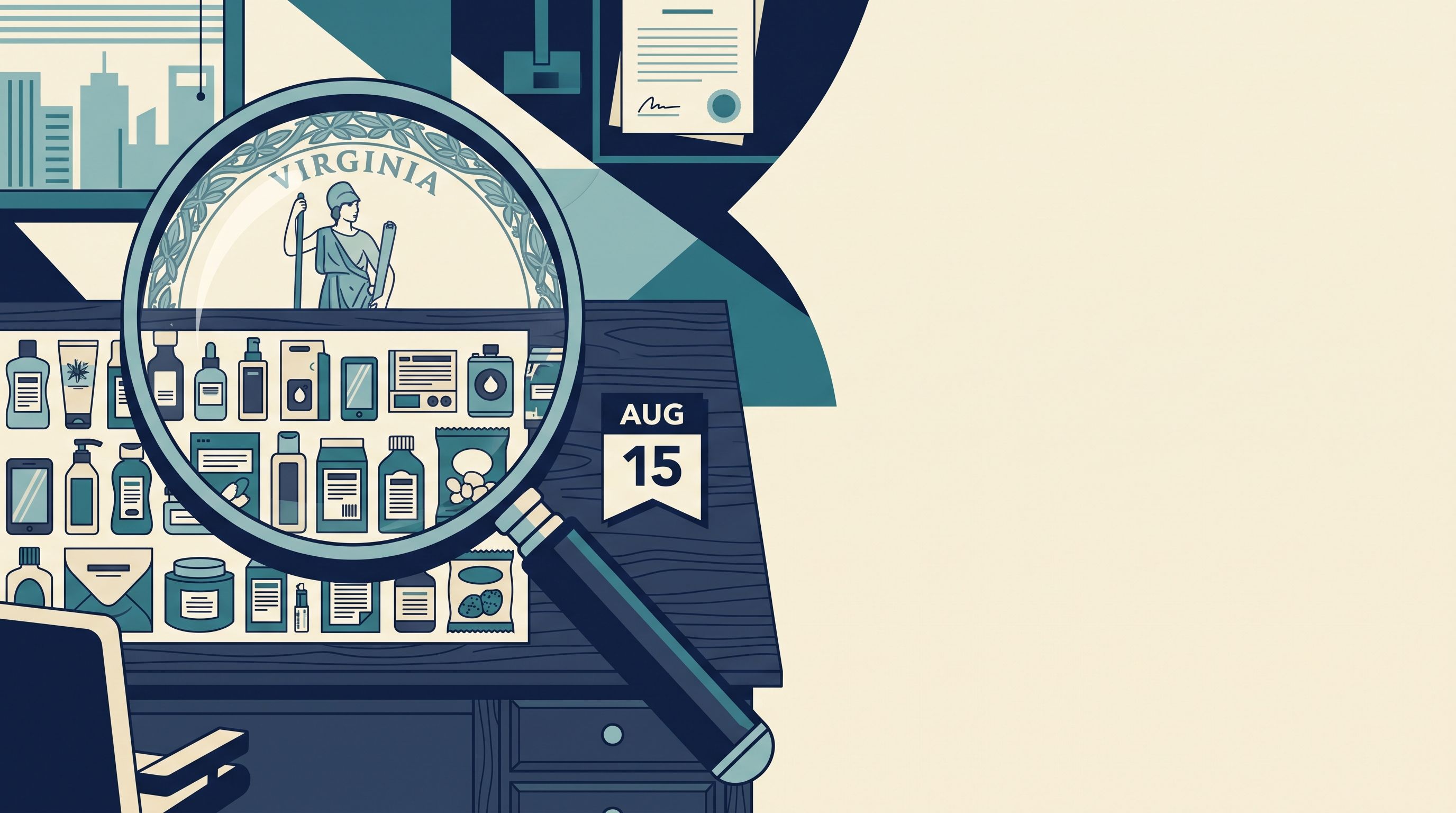
Virginia Attorney General Jay Jones announced a new Regulated Products Enforcement Unit on July 30, giving the commonwealth a dedicated enforcement arm for hemp THC products, kratom, nicotine vapes and other "emerging intoxicants" — just over two weeks before Virginia's 2 milligram per-package THC cap takes effect on August 15. One day later, seven hemp businesses filed a federal lawsuit asking a court to stop that cap from ever being enforced.
According to the announcement, the unit will handle civil enforcement, retail compliance, product directories and public education as new intoxicating products continue to enter the market. Inspectors assigned to the unit will monitor retailers, conduct compliance checks and coordinate enforcement with the Virginia Alcoholic Beverage Control Authority and other state agencies.
The unit's legal footing comes from the Vape Enforcement Act (HB 308/SB 360), passed by the General Assembly earlier this year, which expanded the Attorney General's authority to enforce Virginia's rules on nicotine vapor products and other regulated intoxicants. The commonwealth has struggled to enforce its existing hemp rules with existing resources: in 2024, the Virginia Department of Agriculture and Consumer Services found violations at 82 percent of the retailers it inspected.
The unit arrives just ahead of the most consequential change to Virginia hemp law since 2023. Budget legislation passed this year removed the exception that allowed hemp products with more than 2 milligrams of total THC per package if they kept a CBD-to-THC ratio of at least 25:1. When that repeal takes effect August 15, no hemp product above 2 milligrams of total THC per package will remain legal at Virginia retail — regardless of CBD content. The same budget legalized recreational marijuana sales, with the retail market scheduled to launch July 1, 2027. For the mechanics of the cap and its penalty structure, see our Virginia hemp cliff compliance countdown.
Seven businesses — Northern Virginia Hemp and Agriculture, Redfern Hemp Co., District Hemp Botanicals, Pure Elkton Manufacturing, Cypress Hemp II, Wellness Warriors and Simply Hemp — filed suit on July 31 in the U.S. District Court for the Western District of Virginia. Former state Sen. Chap Petersen represents the plaintiffs. The complaint names Gov. Abigail Spanberger, Attorney General Jones, Cannabis Control Authority leadership and several commonwealth's attorneys as defendants.
The suit argues the new restrictions amount to an uncompensated taking under the Fifth Amendment, and that the law violates due process and equal protection by carving hemp out of a marketplace the state is simultaneously opening to licensed marijuana operators. "If a 3mg THC beverage is banned on a hemp retailer's shelf for 'public safety,' but a 3mg THC beverage is completely legal and deemed safe if purchased at a state-licensed marijuana dispensary, the distinction is not based on the public safety, but on economic protectionism," the complaint says. The plaintiffs ask the court to declare the restrictions unconstitutional, enjoin enforcement and award damages. Background on the fight is in our earlier coverage of the injunction effort.
Unless a judge intervenes before August 15, Virginia hemp retailers should plan as if the cap and the new enforcement unit are both live on schedule. Practical steps this week:
None of this is legal advice — inventory decisions with felony-adjacent exposure belong in front of your counsel.
Virginia's pairing of a hard product cap with a dedicated enforcement unit sits between two models. Texas went further on July 31, moving delta-8 and THCA products to Schedule I outright — see our Texas recriminalization coverage. The Fourth Circuit has already blessed aggressive state intoxicating-hemp rules in the ruling behind Virginia's authority. And the federal 0.4 milligram per-container standard scheduled for November 12 would reach further than Virginia's cap does — making the commonwealth an early test of enforcement mechanics other states may copy.
The cap takes effect August 15. The plaintiffs have asked for an injunction, but as of August 5 no ruling or hearing date had been made public — operators betting on judicial rescue are betting their license on it. The enforcement unit is operational now. The federal hemp redefinition arrives November 12 absent congressional action, and Virginia's retail marijuana market opens July 1, 2027.
A unit launched by Attorney General Jay Jones in late July 2026 to coordinate enforcement on THC and hemp products, kratom, liquid nicotine vapes and other emerging intoxicants, including retail inspections and compliance checks.
August 15, 2026. Hemp products offered at retail may not exceed 2 milligrams of total THC per package once the 25:1 CBD-to-THC ratio exception is repealed.
Yes. Seven hemp businesses filed suit July 31, 2026 in the U.S. District Court for the Western District of Virginia, alleging an unconstitutional taking and equal-protection violations, and asking the court to block enforcement. No ruling had issued as of August 5.
Audit every SKU against the 2 mg cap, refresh COAs, plan sell-through or transfer of non-compliant inventory, and document compliance steps. Talk to your counsel.
This page is informational, not legal advice. Verify with a Virginia-licensed attorney before acting.
Virginia Attorney General Jay Jones announced a new Regulated Products Enforcement Unit on July 30, giving the commonwealth a dedicated enforcement arm for hemp THC products, kratom, nicotine vapes and other "emerging intoxicants" — just over two weeks before Virginia's 2 milligram per-package THC cap takes effect on August 15. One day later, seven hemp businesses filed a federal lawsuit asking a court to stop that cap from ever being enforced.
According to the announcement, the unit will handle civil enforcement, retail compliance, product directories and public education as new intoxicating products continue to enter the market. Inspectors assigned to the unit will monitor retailers, conduct compliance checks and coordinate enforcement with the Virginia Alcoholic Beverage Control Authority and other state agencies.
The unit's legal footing comes from the Vape Enforcement Act (HB 308/SB 360), passed by the General Assembly earlier this year, which expanded the Attorney General's authority to enforce Virginia's rules on nicotine vapor products and other regulated intoxicants. The commonwealth has struggled to enforce its existing hemp rules with existing resources: in 2024, the Virginia Department of Agriculture and Consumer Services found violations at 82 percent of the retailers it inspected.
The unit arrives just ahead of the most consequential change to Virginia hemp law since 2023. Budget legislation passed this year removed the exception that allowed hemp products with more than 2 milligrams of total THC per package if they kept a CBD-to-THC ratio of at least 25:1. When that repeal takes effect August 15, no hemp product above 2 milligrams of total THC per package will remain legal at Virginia retail — regardless of CBD content. The same budget legalized recreational marijuana sales, with the retail market scheduled to launch July 1, 2027. For the mechanics of the cap and its penalty structure, see our Virginia hemp cliff compliance countdown.
Seven businesses — Northern Virginia Hemp and Agriculture, Redfern Hemp Co., District Hemp Botanicals, Pure Elkton Manufacturing, Cypress Hemp II, Wellness Warriors and Simply Hemp — filed suit on July 31 in the U.S. District Court for the Western District of Virginia. Former state Sen. Chap Petersen represents the plaintiffs. The complaint names Gov. Abigail Spanberger, Attorney General Jones, Cannabis Control Authority leadership and several commonwealth's attorneys as defendants.
The suit argues the new restrictions amount to an uncompensated taking under the Fifth Amendment, and that the law violates due process and equal protection by carving hemp out of a marketplace the state is simultaneously opening to licensed marijuana operators. "If a 3mg THC beverage is banned on a hemp retailer's shelf for 'public safety,' but a 3mg THC beverage is completely legal and deemed safe if purchased at a state-licensed marijuana dispensary, the distinction is not based on the public safety, but on economic protectionism," the complaint says. The plaintiffs ask the court to declare the restrictions unconstitutional, enjoin enforcement and award damages. Background on the fight is in our earlier coverage of the injunction effort.
Unless a judge intervenes before August 15, Virginia hemp retailers should plan as if the cap and the new enforcement unit are both live on schedule. Practical steps this week:
None of this is legal advice — inventory decisions with felony-adjacent exposure belong in front of your counsel.
Virginia's pairing of a hard product cap with a dedicated enforcement unit sits between two models. Texas went further on July 31, moving delta-8 and THCA products to Schedule I outright — see our Texas recriminalization coverage. The Fourth Circuit has already blessed aggressive state intoxicating-hemp rules in the ruling behind Virginia's authority. And the federal 0.4 milligram per-container standard scheduled for November 12 would reach further than Virginia's cap does — making the commonwealth an early test of enforcement mechanics other states may copy.
The cap takes effect August 15. The plaintiffs have asked for an injunction, but as of August 5 no ruling or hearing date had been made public — operators betting on judicial rescue are betting their license on it. The enforcement unit is operational now. The federal hemp redefinition arrives November 12 absent congressional action, and Virginia's retail marijuana market opens July 1, 2027.
A unit launched by Attorney General Jay Jones in late July 2026 to coordinate enforcement on THC and hemp products, kratom, liquid nicotine vapes and other emerging intoxicants, including retail inspections and compliance checks.
August 15, 2026. Hemp products offered at retail may not exceed 2 milligrams of total THC per package once the 25:1 CBD-to-THC ratio exception is repealed.
Yes. Seven hemp businesses filed suit July 31, 2026 in the U.S. District Court for the Western District of Virginia, alleging an unconstitutional taking and equal-protection violations, and asking the court to block enforcement. No ruling had issued as of August 5.
Audit every SKU against the 2 mg cap, refresh COAs, plan sell-through or transfer of non-compliant inventory, and document compliance steps. Talk to your counsel.
This page is informational, not legal advice. Verify with a Virginia-licensed attorney before acting.
