August 13, 2026


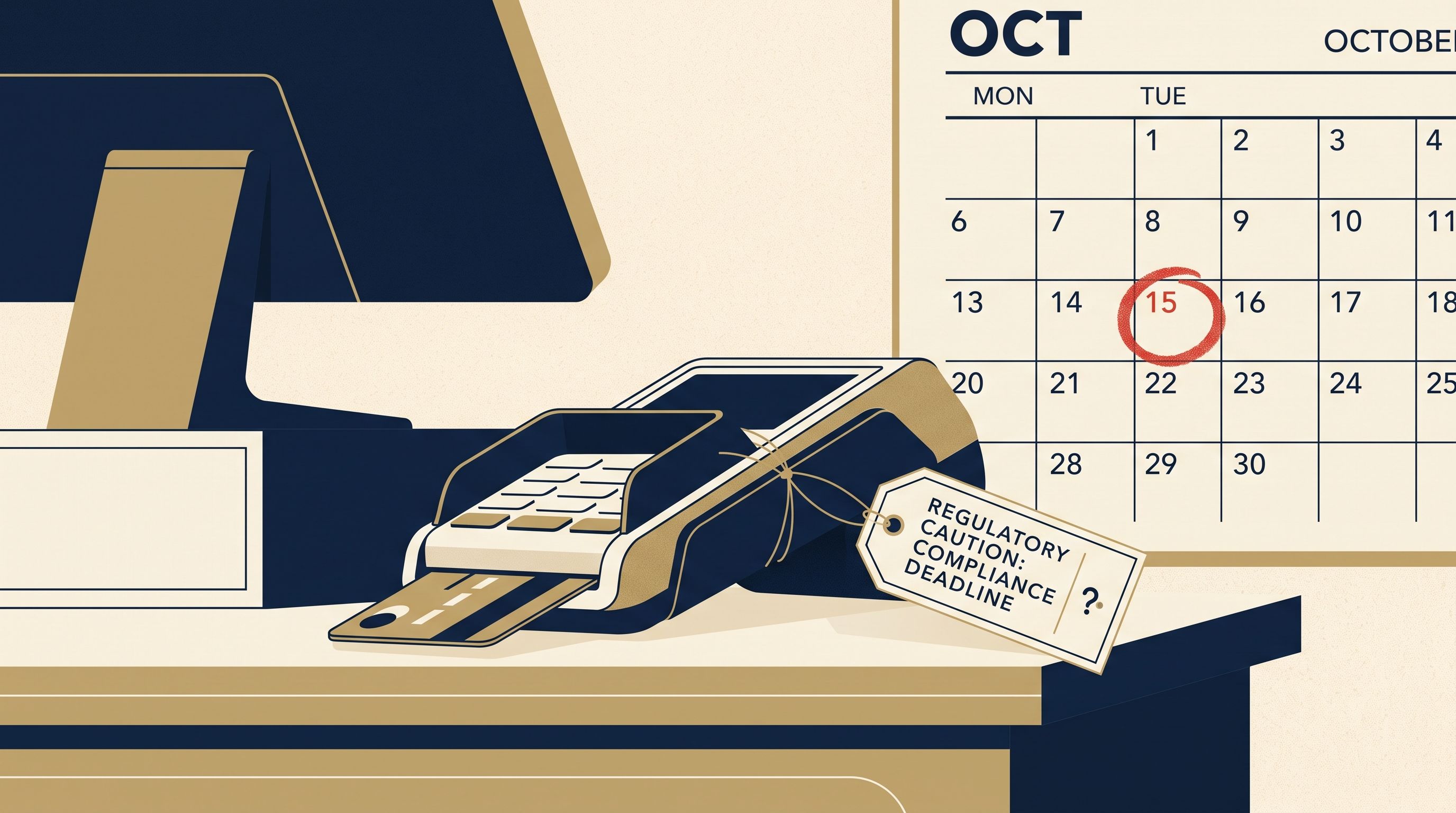
Square has told merchants to remove all CBD, hemp and hemp-derived items from their catalogs — online and in person — by October 15, 2026, according to an email obtained by Marijuana Moment. After that date, the company said, those items will no longer be permitted on the platform at all.
The email cites the federal law taking effect November 12, 2026. But the date Square picked is its own, it lands four weeks earlier than the statute, and it lands nearly two months before the December 11 delay the Senate voted for on August 8.
The notice, subject line "[Action required] Important update about your Square account and CBD products," is unambiguous on the operative point: "Because of this change, selling CBD and hemp-derived products — online or in person — will no longer be permitted on Square's platform."
Three other provisions matter to operators:
A Square spokesperson told Marijuana Moment that "a new federal law taking effect later this year places new restrictions and requirements on hemp-derived products, including those containing CBD," and that the company is notifying impacted sellers and helping them update catalogs where it can.
Here is the sequencing problem. The federal statute bites November 12. The Senate's funding bill would move most of it to December 11. Square's deadline is October 15 — before both.
Asked whether Square would revisit the policy if Congress delays or reverses the ban, the spokesperson said the company is "constantly evaluating" its policies but had "nothing specific to share at this time." Read plainly: there is no commitment to reverse, and no stated trigger that would prompt one.
For a merchant, that means the private deadline is the real one. Congressional action between now and December does not restore a payment rail that has already been switched off.
This is also not a new pattern. Carriers ran the same de-risking play well ahead of any statutory change — see our breakdown of UPS, FedEx and USPS hemp shipping rules. Insurance has been moving the same direction, which is why Congress is weighing a bill to make cannabis businesses insurable. Private infrastructure moves before regulators do, because platforms price legal risk rather than adjudicate it.
The population caught by this is broader than intoxicating-hemp retail. It includes:
The exposure is operational as much as financial. A merchant who removes a large share of catalog SKUs on October 15 and has not underwritten a replacement processor by then is not running a compliance problem — they are running a revenue outage.
Talk to your counsel before signing any new processing agreement. This is regulatory journalism, not legal advice.
Square's policy is national and platform-wide, which makes it blunter than the statute it cites. Federal law will draw a line at 0.4 mg of total THC per container. Square's email draws no such line — it addresses CBD and hemp-derived products generally. A merchant selling a compliant topical in a state with no restrictions is treated the same as one selling intoxicating beverages in a state that is about to ban them.
That gap between platform policy and legal requirement is the thing to plan against, and it compounds a state picture that is already fragmented. Our state-by-state THCA legality guide tracks where the underlying products remain sellable, and Ohio's split hemp-beverage market shows how quickly a channel can fracture. For the statutory timeline itself, see our analysis of the December 11 delay and what still hits November 12.
Watch for other processors and marketplaces issuing similar notices. Square is unlikely to be the last, and each one moves a merchant's real deadline earlier.
Can I still sell CBD using Square? Only until October 15, 2026. Square has told merchants that CBD and hemp-derived products must be removed from catalogs by that date, online and in person.
Does the Senate's delay of the hemp ban change Square's policy? No. Square says it has nothing specific to share about revising the policy even if the federal ban is delayed or reversed.
What happens to my Square Loan if I stop selling CBD? Square says loan balances and terms are unaffected; repayment continues as a percentage of daily card sales on remaining products.
What payment options remain for hemp sellers? High-risk merchant processors and direct merchant accounts remain options, but underwriting standards are tightening ahead of the federal change. Talk to your counsel before signing.
This is regulatory journalism, not legal advice — talk to your counsel.
Square has told merchants to remove all CBD, hemp and hemp-derived items from their catalogs — online and in person — by October 15, 2026, according to an email obtained by Marijuana Moment. After that date, the company said, those items will no longer be permitted on the platform at all.
The email cites the federal law taking effect November 12, 2026. But the date Square picked is its own, it lands four weeks earlier than the statute, and it lands nearly two months before the December 11 delay the Senate voted for on August 8.
The notice, subject line "[Action required] Important update about your Square account and CBD products," is unambiguous on the operative point: "Because of this change, selling CBD and hemp-derived products — online or in person — will no longer be permitted on Square's platform."
Three other provisions matter to operators:
A Square spokesperson told Marijuana Moment that "a new federal law taking effect later this year places new restrictions and requirements on hemp-derived products, including those containing CBD," and that the company is notifying impacted sellers and helping them update catalogs where it can.
Here is the sequencing problem. The federal statute bites November 12. The Senate's funding bill would move most of it to December 11. Square's deadline is October 15 — before both.
Asked whether Square would revisit the policy if Congress delays or reverses the ban, the spokesperson said the company is "constantly evaluating" its policies but had "nothing specific to share at this time." Read plainly: there is no commitment to reverse, and no stated trigger that would prompt one.
For a merchant, that means the private deadline is the real one. Congressional action between now and December does not restore a payment rail that has already been switched off.
This is also not a new pattern. Carriers ran the same de-risking play well ahead of any statutory change — see our breakdown of UPS, FedEx and USPS hemp shipping rules. Insurance has been moving the same direction, which is why Congress is weighing a bill to make cannabis businesses insurable. Private infrastructure moves before regulators do, because platforms price legal risk rather than adjudicate it.
The population caught by this is broader than intoxicating-hemp retail. It includes:
The exposure is operational as much as financial. A merchant who removes a large share of catalog SKUs on October 15 and has not underwritten a replacement processor by then is not running a compliance problem — they are running a revenue outage.
Talk to your counsel before signing any new processing agreement. This is regulatory journalism, not legal advice.
Square's policy is national and platform-wide, which makes it blunter than the statute it cites. Federal law will draw a line at 0.4 mg of total THC per container. Square's email draws no such line — it addresses CBD and hemp-derived products generally. A merchant selling a compliant topical in a state with no restrictions is treated the same as one selling intoxicating beverages in a state that is about to ban them.
That gap between platform policy and legal requirement is the thing to plan against, and it compounds a state picture that is already fragmented. Our state-by-state THCA legality guide tracks where the underlying products remain sellable, and Ohio's split hemp-beverage market shows how quickly a channel can fracture. For the statutory timeline itself, see our analysis of the December 11 delay and what still hits November 12.
Watch for other processors and marketplaces issuing similar notices. Square is unlikely to be the last, and each one moves a merchant's real deadline earlier.
Can I still sell CBD using Square? Only until October 15, 2026. Square has told merchants that CBD and hemp-derived products must be removed from catalogs by that date, online and in person.
Does the Senate's delay of the hemp ban change Square's policy? No. Square says it has nothing specific to share about revising the policy even if the federal ban is delayed or reversed.
What happens to my Square Loan if I stop selling CBD? Square says loan balances and terms are unaffected; repayment continues as a percentage of daily card sales on remaining products.
What payment options remain for hemp sellers? High-risk merchant processors and direct merchant accounts remain options, but underwriting standards are tightening ahead of the federal change. Talk to your counsel before signing.
This is regulatory journalism, not legal advice — talk to your counsel.
