September 23, 2026


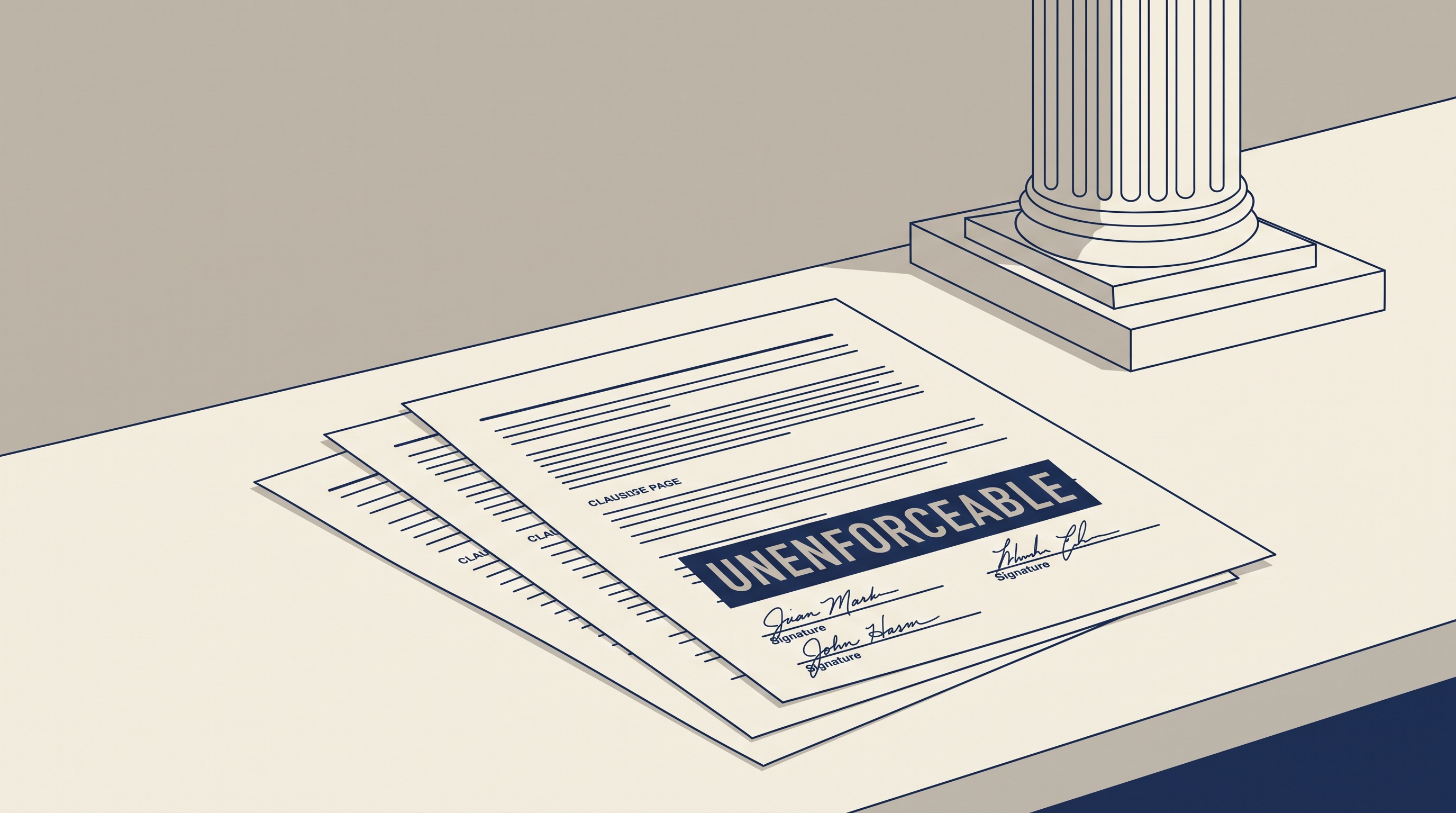
On September 10, 2026, the U.S. Court of Appeals for the Sixth Circuit reversed a $31.8 million jury verdict won by a Michigan marijuana grower, holding that "federal courts cannot enforce agreements to commit federal crimes." The published opinion in Hello Farms Licensing MI, LLC v. GR Vending MI, LLC, No. 25-1759, was written by Judge John Nalbandian and joined in full by Judge Eugene Siler; Judge Whitney Hermandorfer joined all but Part II.A.1. It also settles a question about the April rescheduling order: a Schedule III listing does not make a cannabis contract enforceable in federal court, and it does nothing for a contract signed before the order.
In November 2020, GR Vending MI and CURA MI, both Curaleaf Holdings subsidiaries, contracted to buy Hello Farms's entire 2020 and 2021 harvests, with CURA MI as guarantor. Hello Farms then held only medical grower licenses; GR Vending's licenses covered medical and adult-use sales. GR Vending paid a $2.2 million deposit, refundable on conditions that included the product passing "local and state recreational cannabis testing requirements." The 2020 harvest of about 16,300 pounds passed testing. GR Vending took roughly 2,000 pounds, refused further deliveries in January 2021 as prices fell, and Hello Farms sold the rest to a third party at lower prices.
Hello Farms sued in Michigan state court in February 2021; the defendants removed the case to the Eastern District of Michigan on diversity and pleaded that the contract was illegal under the Controlled Substances Act. Judge Matthew Leitman rejected that defense at summary judgment and after the verdict, "though describing it as a close call," reasoning that this was a medical-marijuana contract and the Rohrabacher-Farr appropriations rider reflects federal tolerance of state medical markets.
First, this was not a medical-marijuana contract. The recreational testing clause pointed the other way, and GR Vending's dual licenses let it move product into its adult-use inventory under Mich. Admin. Code r. 420.214. So the rider and the April 2026 rescheduling, which reach only medical marijuana, "don't influence our evaluation of federal policy here." Judge Hermandorfer did not join this part (II.A.1).
Second, even a purely medical contract would fail. The full panel held that the rider "purports to temporarily deny funding for the prosecution of certain crimes" but "contains no suggestion that the substantive conduct prohibited by the CSA has now been made legal." Because the parties agreed to commit felonies, no balancing of equities applies, and the panel doubts its own 1981 Jackson Purchase balancing test survived Kaiser Steel.
Third, "the rescheduling isn't a safe harbor." "An agreement that was illegal when made cannot be made valid by a subsequent change in the law," and "the April 2026 rule didn't purport to have retroactive effect." Nor would the rule "by itself, legalize the parties' transaction," because it requires DEA registration: "So today, if Hello Farms and Defendants entered the same contract without DEA registration and if we assumed that the contract was limited to medical marijuana, they'd still be violating federal law."
Two further points close the exits. A lost-profits claim "arises from and is measured by" the illegal promise, so damages fare no better than specific performance: "We must not enforce illegal conduct, not just refrain from commanding illegal conduct." Had Hello Farms walked away instead, "Hello Farms's illegality defense would succeed."
The opinion is recommended for publication, so it binds every federal district court in Michigan, Ohio, Kentucky and Tennessee. Judge Hermandorfer's reservation concerns only whether this contract reached the adult-use market, and the holding that a medical-only contract fails too was unanimous. A rehearing petition is possible within 14 days under Federal Rule of Appellate Procedure 40, about September 24; none had been reported as of September 16.
Beyond the circuit the picture is less uniform. The opinion cites five district courts that declined to enforce marijuana-related agreements, but also a footnote in the Tenth Circuit's 2024 decision in Bartch v. Barch as a place where courts "proposed" that paying money damages differs from ordering illegal performance, a distinction the Sixth Circuit rejected. In Bartch, a divided Tenth Circuit left a $6.4 million judgment involving a Maryland-licensed marijuana company in place because illegality had not been raised before judgment, while vacating an order forcing a sale of equity in the business. That is the closest thing to a circuit divergence, and it is narrow. Footnote 8 leaves one door open: "we aren't suggesting that Congress or agencies couldn't override the principle by giving retroactive validity to agreements." Nothing in the April order does that.
Michigan's adult-use statute states, at MCL 333.27960(3), that "it is the public policy of this state that contracts related to the operation of marihuana establishments or tribal marihuana businesses be enforceable." That policy did not survive removal; the Sixth Circuit treats federal illegality as a federal question in any forum. Hemp sits differently: hemp-derived products fall outside the Controlled Substances Act's definition of marijuana, which is why illegality has not been the battleground in Michigan's hemp-derived THC disputes.
One day earlier, on September 9, the D.C. Circuit's stay denial left the April rescheduling order in force. The two rulings are consistent and together define the order's reach: in force, prospective, and useful only to registered medical licensees. Adult-use-only operators, still in Schedule I pending the separate DEA-1362 proceeding, are where Hello Farms stood in Part II.A.1; medical versus adult-use status after rescheduling is now a contract distinction as much as a tax one.
Ohio is a Sixth Circuit state whose federal courts were already there: the opinion cites a February 2025 Southern District of Ohio decision, CCH Acquisitions v. J&J&D Holdings, declining to enforce an agreement to buy a marijuana business. Ohio's hemp litigation in the same circuit proceeds in federal court on constitutional claims. Footnote 7 also lists what the rider never touched, from Section 280E to bankruptcy, the compliance ripples after rescheduling that only registered medical licensees can now expect the order to ease.
| Question | Federal court (diversity) | Michigan state court | Arbitration |
|---|---|---|---|
| Is a plant-touching contract enforceable? | No, in Michigan, Ohio, Kentucky and Tennessee, under Hello Farms (published, Sept. 10, 2026). Lost profits are barred as well as specific performance. | State policy says yes: MCL 333.27960(3) declares contracts related to marihuana establishments enforceable. The Sixth Circuit's ruling does not bind Michigan's courts. | The arbitrator applies the law the parties chose; enforceability then turns on where the award is confirmed. |
| Which law decides the illegality question? | Federal law, even in a diversity case (Kelly v. Kosuga, as applied in Hello Farms). | Michigan contract law, read with the MRTMA's policy statement. | The contract's governing-law clause, subject to the confirming court's public-policy review. |
| Can the illegality defense be raised? | Yes, and the court must raise it on its own if the parties do not (opinion, note 4). It works for either side. | It can be pleaded; the party raising it argues against the statute's declared policy. | Yes, before the arbitrator, and again by the losing party resisting confirmation in court. |
| Does Schedule III change the answer? | No for contracts made before April 28, 2026. For new medical-only deals the court's stated condition is DEA registration. | Not addressed by Michigan's courts; the state's policy never depended on the federal schedule. | Only as the arbitrator applies it under the chosen law. |
| Practical risk | A state-court filing can be removed here whenever the parties are citizens of different states, as happened in Hello Farms. | Removal, unless the forum clause is exclusive and waives it; collecting against out-of-state assets still needs another court. | Confirmation in federal court invites the same public-policy defense; confirmation in state court avoids the federal forum but not the counterparty's objections. |
Not in the Sixth Circuit. Hello Farms Licensing MI, LLC v. GR Vending MI, LLC, No. 25-1759 (6th Cir. Sept. 10, 2026), holds that federal courts cannot enforce an agreement whose performance requires committing federal crimes, including growing, possessing and distributing marijuana, and that a claim for lost-profit damages is barred just like an order compelling performance. The rule binds federal district courts in Michigan, Ohio, Kentucky and Tennessee.
No. The full panel held that the appropriations rider only bars the Department of Justice from spending appropriated funds on certain prosecutions of state-compliant medical marijuana conduct. It does not legalize or decriminalize anything, so even a contract limited to medical marijuana remains an agreement to commit federal crimes that a federal court will not enforce.
No. The court held that the April 2026 order (91 FR 22714) did not purport to have retroactive effect, so it cannot revive a contract that was illegal when signed, and that the order covers only state-licensed medical marijuana and requires DEA registration, so the same medical-only deal made today without registration would still violate federal law.
As a published Sixth Circuit opinion it binds federal courts in Michigan, Ohio, Kentucky and Tennessee. State courts apply their own law; Michigan's adult-use statute, MCL 333.27960(3), declares it state policy that contracts related to the operation of marijuana establishments be enforceable.
Counsel are focusing on forum-selection clauses that make a state court the exclusive venue and address removal, arbitration with a state-law seat and a state-court confirmation path, and payment terms that do not leave the seller as an unsecured creditor. Choice-of-law and severability clauses do not cure federal illegality, which the court treats as a question of federal law even in a diversity case. Talk to your counsel before signing the next plant-touching agreement.
This is regulatory journalism, not legal advice — talk to your counsel.
On September 10, 2026, the U.S. Court of Appeals for the Sixth Circuit reversed a $31.8 million jury verdict won by a Michigan marijuana grower, holding that "federal courts cannot enforce agreements to commit federal crimes." The published opinion in Hello Farms Licensing MI, LLC v. GR Vending MI, LLC, No. 25-1759, was written by Judge John Nalbandian and joined in full by Judge Eugene Siler; Judge Whitney Hermandorfer joined all but Part II.A.1. It also settles a question about the April rescheduling order: a Schedule III listing does not make a cannabis contract enforceable in federal court, and it does nothing for a contract signed before the order.
In November 2020, GR Vending MI and CURA MI, both Curaleaf Holdings subsidiaries, contracted to buy Hello Farms's entire 2020 and 2021 harvests, with CURA MI as guarantor. Hello Farms then held only medical grower licenses; GR Vending's licenses covered medical and adult-use sales. GR Vending paid a $2.2 million deposit, refundable on conditions that included the product passing "local and state recreational cannabis testing requirements." The 2020 harvest of about 16,300 pounds passed testing. GR Vending took roughly 2,000 pounds, refused further deliveries in January 2021 as prices fell, and Hello Farms sold the rest to a third party at lower prices.
Hello Farms sued in Michigan state court in February 2021; the defendants removed the case to the Eastern District of Michigan on diversity and pleaded that the contract was illegal under the Controlled Substances Act. Judge Matthew Leitman rejected that defense at summary judgment and after the verdict, "though describing it as a close call," reasoning that this was a medical-marijuana contract and the Rohrabacher-Farr appropriations rider reflects federal tolerance of state medical markets.
First, this was not a medical-marijuana contract. The recreational testing clause pointed the other way, and GR Vending's dual licenses let it move product into its adult-use inventory under Mich. Admin. Code r. 420.214. So the rider and the April 2026 rescheduling, which reach only medical marijuana, "don't influence our evaluation of federal policy here." Judge Hermandorfer did not join this part (II.A.1).
Second, even a purely medical contract would fail. The full panel held that the rider "purports to temporarily deny funding for the prosecution of certain crimes" but "contains no suggestion that the substantive conduct prohibited by the CSA has now been made legal." Because the parties agreed to commit felonies, no balancing of equities applies, and the panel doubts its own 1981 Jackson Purchase balancing test survived Kaiser Steel.
Third, "the rescheduling isn't a safe harbor." "An agreement that was illegal when made cannot be made valid by a subsequent change in the law," and "the April 2026 rule didn't purport to have retroactive effect." Nor would the rule "by itself, legalize the parties' transaction," because it requires DEA registration: "So today, if Hello Farms and Defendants entered the same contract without DEA registration and if we assumed that the contract was limited to medical marijuana, they'd still be violating federal law."
Two further points close the exits. A lost-profits claim "arises from and is measured by" the illegal promise, so damages fare no better than specific performance: "We must not enforce illegal conduct, not just refrain from commanding illegal conduct." Had Hello Farms walked away instead, "Hello Farms's illegality defense would succeed."
The opinion is recommended for publication, so it binds every federal district court in Michigan, Ohio, Kentucky and Tennessee. Judge Hermandorfer's reservation concerns only whether this contract reached the adult-use market, and the holding that a medical-only contract fails too was unanimous. A rehearing petition is possible within 14 days under Federal Rule of Appellate Procedure 40, about September 24; none had been reported as of September 16.
Beyond the circuit the picture is less uniform. The opinion cites five district courts that declined to enforce marijuana-related agreements, but also a footnote in the Tenth Circuit's 2024 decision in Bartch v. Barch as a place where courts "proposed" that paying money damages differs from ordering illegal performance, a distinction the Sixth Circuit rejected. In Bartch, a divided Tenth Circuit left a $6.4 million judgment involving a Maryland-licensed marijuana company in place because illegality had not been raised before judgment, while vacating an order forcing a sale of equity in the business. That is the closest thing to a circuit divergence, and it is narrow. Footnote 8 leaves one door open: "we aren't suggesting that Congress or agencies couldn't override the principle by giving retroactive validity to agreements." Nothing in the April order does that.
Michigan's adult-use statute states, at MCL 333.27960(3), that "it is the public policy of this state that contracts related to the operation of marihuana establishments or tribal marihuana businesses be enforceable." That policy did not survive removal; the Sixth Circuit treats federal illegality as a federal question in any forum. Hemp sits differently: hemp-derived products fall outside the Controlled Substances Act's definition of marijuana, which is why illegality has not been the battleground in Michigan's hemp-derived THC disputes.
One day earlier, on September 9, the D.C. Circuit's stay denial left the April rescheduling order in force. The two rulings are consistent and together define the order's reach: in force, prospective, and useful only to registered medical licensees. Adult-use-only operators, still in Schedule I pending the separate DEA-1362 proceeding, are where Hello Farms stood in Part II.A.1; medical versus adult-use status after rescheduling is now a contract distinction as much as a tax one.
Ohio is a Sixth Circuit state whose federal courts were already there: the opinion cites a February 2025 Southern District of Ohio decision, CCH Acquisitions v. J&J&D Holdings, declining to enforce an agreement to buy a marijuana business. Ohio's hemp litigation in the same circuit proceeds in federal court on constitutional claims. Footnote 7 also lists what the rider never touched, from Section 280E to bankruptcy, the compliance ripples after rescheduling that only registered medical licensees can now expect the order to ease.
| Question | Federal court (diversity) | Michigan state court | Arbitration |
|---|---|---|---|
| Is a plant-touching contract enforceable? | No, in Michigan, Ohio, Kentucky and Tennessee, under Hello Farms (published, Sept. 10, 2026). Lost profits are barred as well as specific performance. | State policy says yes: MCL 333.27960(3) declares contracts related to marihuana establishments enforceable. The Sixth Circuit's ruling does not bind Michigan's courts. | The arbitrator applies the law the parties chose; enforceability then turns on where the award is confirmed. |
| Which law decides the illegality question? | Federal law, even in a diversity case (Kelly v. Kosuga, as applied in Hello Farms). | Michigan contract law, read with the MRTMA's policy statement. | The contract's governing-law clause, subject to the confirming court's public-policy review. |
| Can the illegality defense be raised? | Yes, and the court must raise it on its own if the parties do not (opinion, note 4). It works for either side. | It can be pleaded; the party raising it argues against the statute's declared policy. | Yes, before the arbitrator, and again by the losing party resisting confirmation in court. |
| Does Schedule III change the answer? | No for contracts made before April 28, 2026. For new medical-only deals the court's stated condition is DEA registration. | Not addressed by Michigan's courts; the state's policy never depended on the federal schedule. | Only as the arbitrator applies it under the chosen law. |
| Practical risk | A state-court filing can be removed here whenever the parties are citizens of different states, as happened in Hello Farms. | Removal, unless the forum clause is exclusive and waives it; collecting against out-of-state assets still needs another court. | Confirmation in federal court invites the same public-policy defense; confirmation in state court avoids the federal forum but not the counterparty's objections. |
Not in the Sixth Circuit. Hello Farms Licensing MI, LLC v. GR Vending MI, LLC, No. 25-1759 (6th Cir. Sept. 10, 2026), holds that federal courts cannot enforce an agreement whose performance requires committing federal crimes, including growing, possessing and distributing marijuana, and that a claim for lost-profit damages is barred just like an order compelling performance. The rule binds federal district courts in Michigan, Ohio, Kentucky and Tennessee.
No. The full panel held that the appropriations rider only bars the Department of Justice from spending appropriated funds on certain prosecutions of state-compliant medical marijuana conduct. It does not legalize or decriminalize anything, so even a contract limited to medical marijuana remains an agreement to commit federal crimes that a federal court will not enforce.
No. The court held that the April 2026 order (91 FR 22714) did not purport to have retroactive effect, so it cannot revive a contract that was illegal when signed, and that the order covers only state-licensed medical marijuana and requires DEA registration, so the same medical-only deal made today without registration would still violate federal law.
As a published Sixth Circuit opinion it binds federal courts in Michigan, Ohio, Kentucky and Tennessee. State courts apply their own law; Michigan's adult-use statute, MCL 333.27960(3), declares it state policy that contracts related to the operation of marijuana establishments be enforceable.
Counsel are focusing on forum-selection clauses that make a state court the exclusive venue and address removal, arbitration with a state-law seat and a state-court confirmation path, and payment terms that do not leave the seller as an unsecured creditor. Choice-of-law and severability clauses do not cure federal illegality, which the court treats as a question of federal law even in a diversity case. Talk to your counsel before signing the next plant-touching agreement.
This is regulatory journalism, not legal advice — talk to your counsel.
