

August 5, 2026


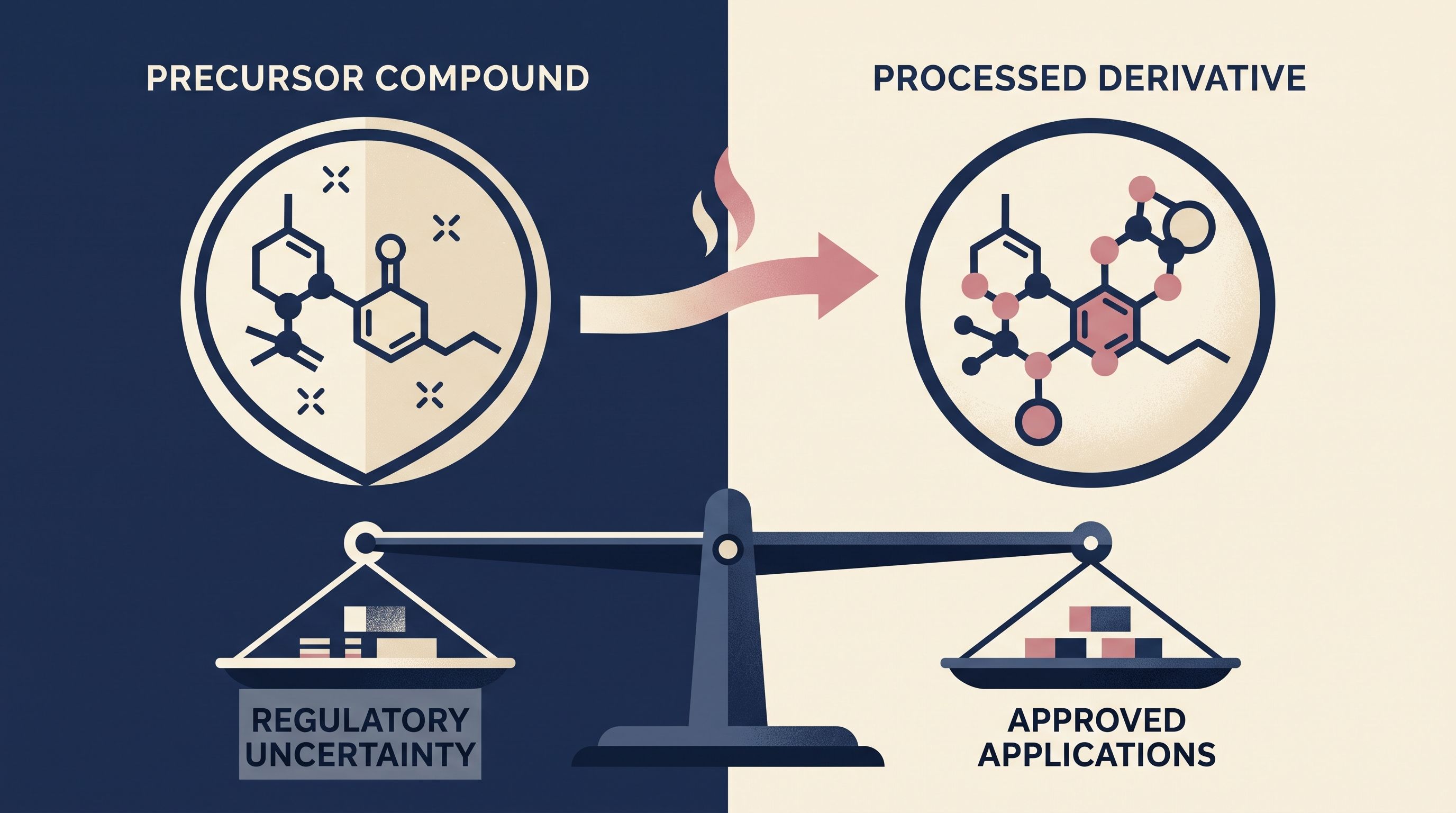
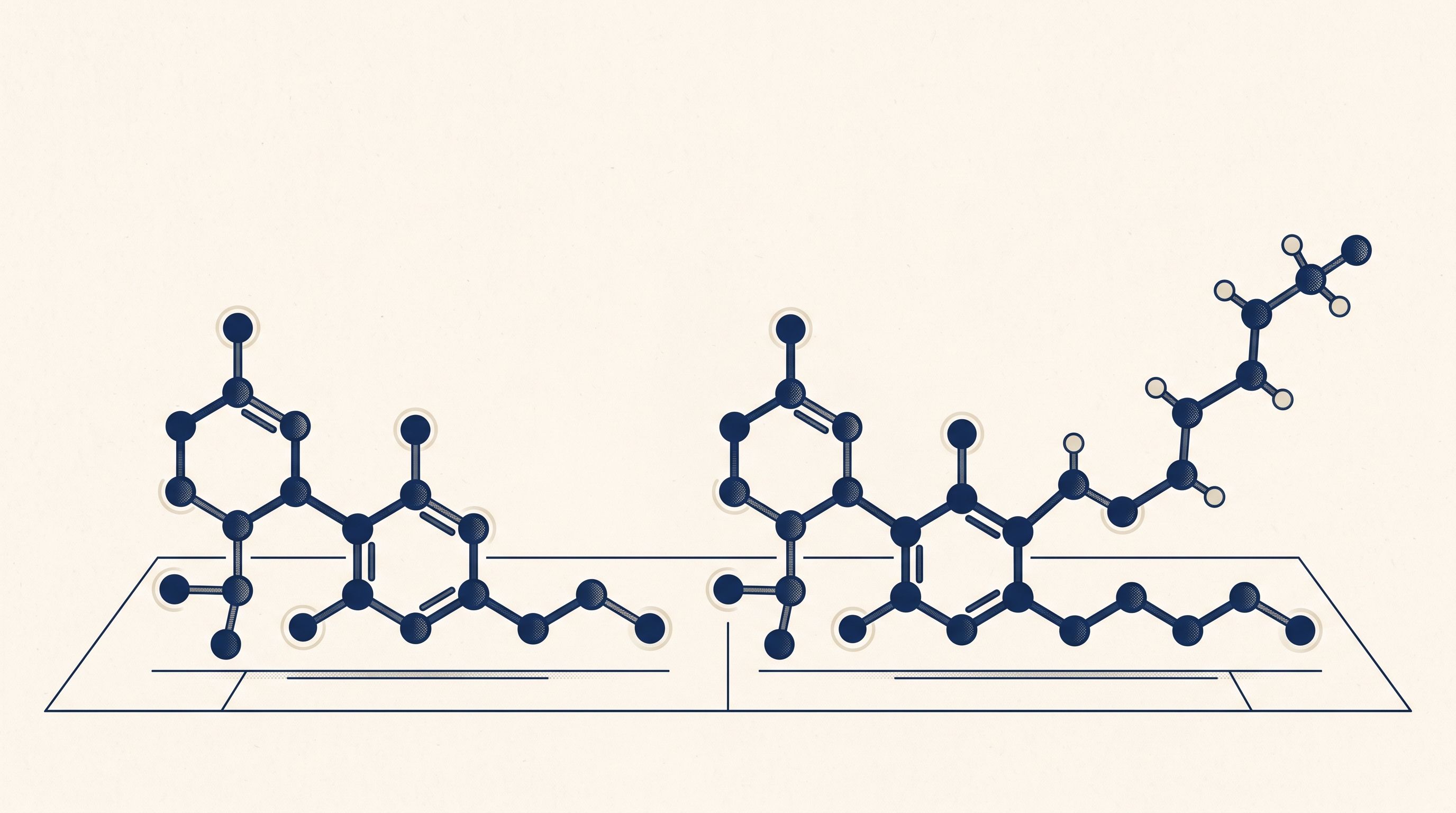
THCA vs THC is a chemistry distinction that became a billion-dollar legal question. THCA (tetrahydrocannabinolic acid) is the non-intoxicating acid form of THC found in raw cannabis; apply heat and it converts to delta-9 THC, the compound federal and state law actually restricts. For several years, that one-step difference is what allowed "THCA flower" to be sold as legal hemp in much of the country. In 2026, the gap between THC A vs THC is closing fast — Texas erased it on July 31, and the federal definition change on November 12 is set to erase it nationally.
Raw cannabis plants produce mostly THCA, not THC. THCA does not produce intoxication in its raw form because it does not bind effectively to the brain's CB1 receptors. Heat changes that: smoking, vaping or baking triggers decarboxylation, which strips a carboxyl group from the THCA molecule and converts it to delta-9 THC at roughly an 87.7 percent conversion rate. That conversion factor matters legally, as the total-THC math below shows.
The 2018 Farm Bill defined hemp as cannabis with no more than 0.3 percent delta-9 THC on a dry-weight basis. The definition tested for delta-9 THC only — it said nothing about THCA. High-THCA flower that stayed under 0.3 percent delta-9 could therefore test as federally legal hemp, even though heating it produces the same intoxicating product as marijuana. That is the "THCA loophole," and it built a national mail-order flower market. The Congressional Research Service has documented both the loophole and the fix Congress passed to close it.
States responded unevenly. Many moved to "total THC" testing, which counts THCA toward the limit using the formula: total THC = delta-9 THC + (0.877 × THCA). In total-THC states, THCA flower has never been legal hemp. In delta-9-only states, it circulated openly. Which rule applies where is the single most important fact for anyone selling or shipping THCA products — our state-by-state THCA legality guide tracks all 50 states.
Two events this year are ending the THCA-vs-THC distinction as a business model.
The state picture sorts into three buckets, mapped in detail in the state-by-state guide:
For how THCA compares against the other cannabinoids operators actually stock, see THCA vs Delta-9 and THCA vs Delta-8.
No. THCA is the non-intoxicating acid form found in raw cannabis; heating converts it into delta-9 THC through decarboxylation.
The 2018 Farm Bill tested hemp only for delta-9 THC, so high-THCA flower could test as legal hemp. Many states now use total-THC tests that count THCA, and the federal standard changes November 12, 2026.
Raw THCA does not. Once heated — smoked, vaped or baked — it converts to THC, which does.
It depends on the state. Texas classified it as Schedule I on July 31, 2026, and the federal total-THC definition taking effect November 12 will treat most THCA flower as marijuana. Check your state's page and talk to your counsel.
Regulators typically use delta-9 THC + (0.877 × THCA), which accounts for the weight lost during decarboxylation.
This page is informational, not legal advice. Verify with counsel licensed in your state before acting.
THCA vs THC is a chemistry distinction that became a billion-dollar legal question. THCA (tetrahydrocannabinolic acid) is the non-intoxicating acid form of THC found in raw cannabis; apply heat and it converts to delta-9 THC, the compound federal and state law actually restricts. For several years, that one-step difference is what allowed "THCA flower" to be sold as legal hemp in much of the country. In 2026, the gap between THC A vs THC is closing fast — Texas erased it on July 31, and the federal definition change on November 12 is set to erase it nationally.
Raw cannabis plants produce mostly THCA, not THC. THCA does not produce intoxication in its raw form because it does not bind effectively to the brain's CB1 receptors. Heat changes that: smoking, vaping or baking triggers decarboxylation, which strips a carboxyl group from the THCA molecule and converts it to delta-9 THC at roughly an 87.7 percent conversion rate. That conversion factor matters legally, as the total-THC math below shows.
The 2018 Farm Bill defined hemp as cannabis with no more than 0.3 percent delta-9 THC on a dry-weight basis. The definition tested for delta-9 THC only — it said nothing about THCA. High-THCA flower that stayed under 0.3 percent delta-9 could therefore test as federally legal hemp, even though heating it produces the same intoxicating product as marijuana. That is the "THCA loophole," and it built a national mail-order flower market. The Congressional Research Service has documented both the loophole and the fix Congress passed to close it.
States responded unevenly. Many moved to "total THC" testing, which counts THCA toward the limit using the formula: total THC = delta-9 THC + (0.877 × THCA). In total-THC states, THCA flower has never been legal hemp. In delta-9-only states, it circulated openly. Which rule applies where is the single most important fact for anyone selling or shipping THCA products — our state-by-state THCA legality guide tracks all 50 states.
Two events this year are ending the THCA-vs-THC distinction as a business model.
The state picture sorts into three buckets, mapped in detail in the state-by-state guide:
For how THCA compares against the other cannabinoids operators actually stock, see THCA vs Delta-9 and THCA vs Delta-8.
No. THCA is the non-intoxicating acid form found in raw cannabis; heating converts it into delta-9 THC through decarboxylation.
The 2018 Farm Bill tested hemp only for delta-9 THC, so high-THCA flower could test as legal hemp. Many states now use total-THC tests that count THCA, and the federal standard changes November 12, 2026.
Raw THCA does not. Once heated — smoked, vaped or baked — it converts to THC, which does.
It depends on the state. Texas classified it as Schedule I on July 31, 2026, and the federal total-THC definition taking effect November 12 will treat most THCA flower as marijuana. Check your state's page and talk to your counsel.
Regulators typically use delta-9 THC + (0.877 × THCA), which accounts for the weight lost during decarboxylation.
This page is informational, not legal advice. Verify with counsel licensed in your state before acting.
