
Sign Up
Ready to replace complexity with clarity?
Answer your real world compliance questions (limited time) and save thousands in legal fees and avoided fines.
Automate Compliance Today

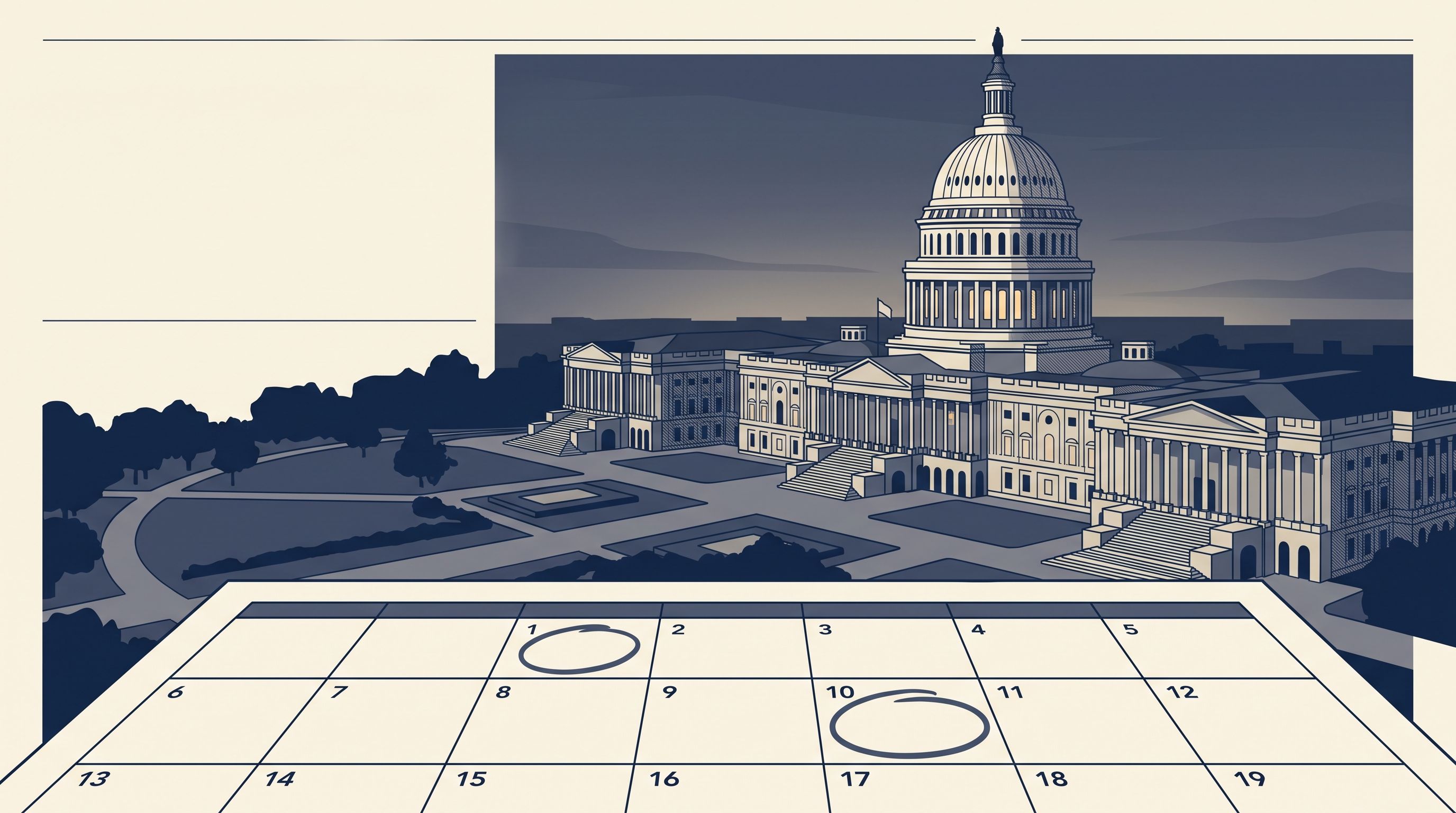
The President signed H.R. 6500 on Wednesday, September 2, 2026, the same day it reached his desk. It is now Public Law 119-103. The Senate had passed it 90–6 on August 8 after tabling Sen. Ted Budd's amendment to strip the hemp delay 61–32; the House agreed 370–48 on September 1 (Roll no. 286). Section 2019 of the law is a date change, not a policy change — and for most operators the hemp ban 2026 deadline that binds them was never the federal one.
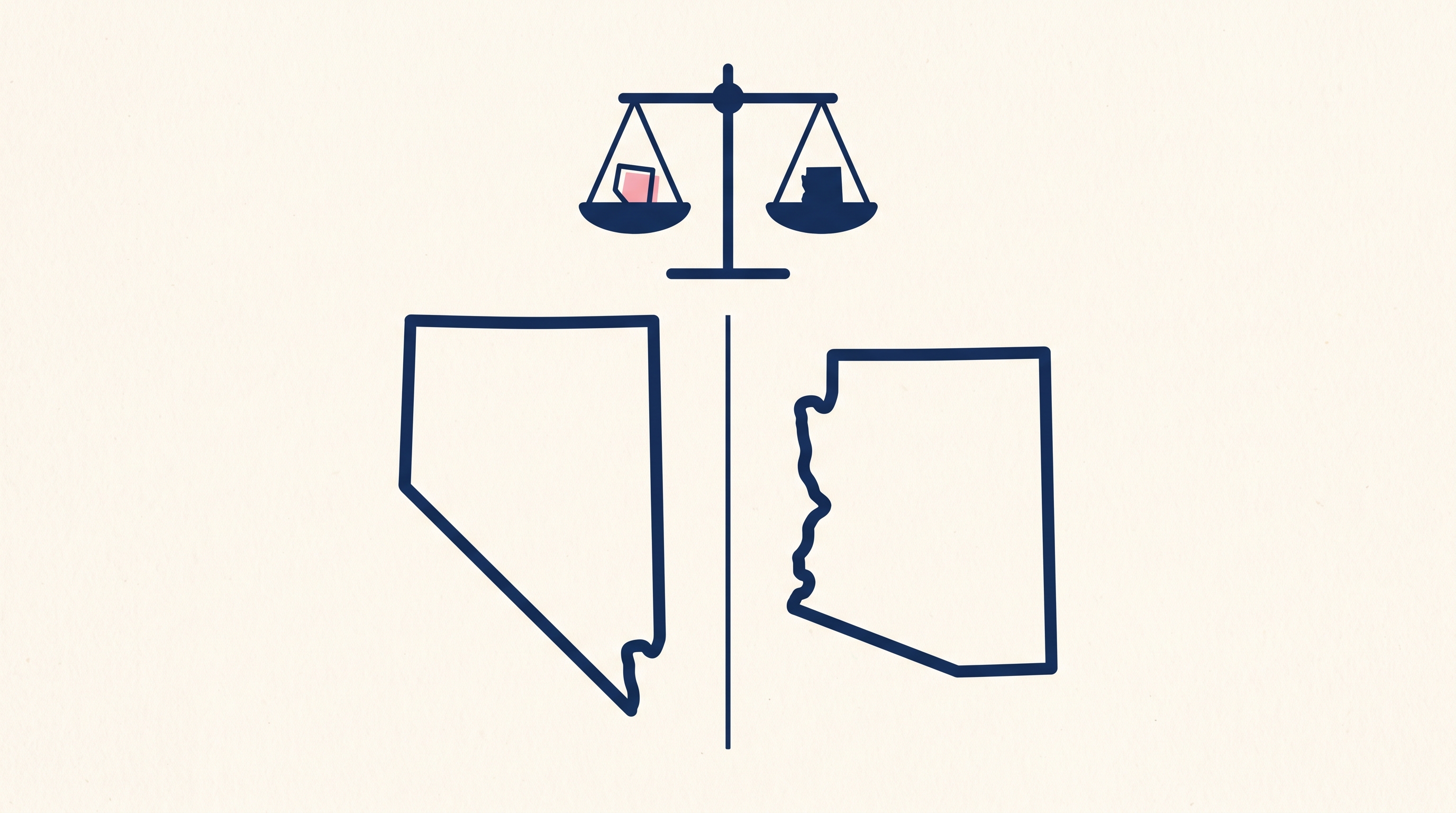
That is the part the signing coverage skipped. Missouri's date did not move. Illinois wrote November 12 into its own statute. Virginia, Ohio and Texas were already stricter than the federal floor and never depended on it. And Square's October 15 cutoff for hemp and CBD catalogs comes before any of them. This is the state-by-state map of which clock governs which SKU.
Section 2019 reads, in relevant part: "Until December 11, 2026, the amendments made by section 781 … shall only apply with respect to products described in paragraphs (1)(C)(ii)(I) and (1)(C)(iv)(I) of section 297A." Those two paragraphs cover cannabinoids "not capable of being naturally produced by a Cannabis sativa L. plant." Products containing them still lose hemp status on November 12.
Everything else in Section 781 now takes effect December 11: the switch from a delta-9-only test to total THC, the 0.4 mg total-THC per-container cap on finished products, and the exclusion for cannabinoids the plant can produce but that were "synthesized or manufactured outside the plant." Which bucket a given compound falls into is a factual question the statute does not answer compound by compound. THC-O acetate is the clear November 12 case; CBD-converted delta-8 is generally argued to sit in the December 11 bucket. Our refreshed explainer on the federal delay to December 11 covers the federal side; this post is about everything the federal date does not control.
Gov. Mike Kehoe signed HB 2641, the Intoxicating Cannabinoid Control Act, on April 23, 2026. It bars hemp-derived cannabinoid products above 0.4 mg THC per container from November 12 and routes what survives into licensed marijuana dispensaries. The bill anticipated a federal delay: it lists product types that fall under the ban on November 12 regardless of what Congress does — "any solid candy, gummy, chewable product, tablet, capsule, oil, baked good, or other solid edible," plus smokable or vapeable raw plant material containing any THCA. Beverages are not on that list, which is why they are thought to slide to the federal date; plaintiffs in the industry's federal challenge say even that is unclear. The state's motion to dismiss is pending before Judge M. Douglas Harpool in the Western District of Missouri; no ruling has issued. Missouri's earlier beverage-only compromise is the backdrop.
The same line is being enforced inside Missouri's licensed market. On September 2 the Division of Cannabis Regulation ordered a mandatory recall of products from GF Extraction Lab LLC (MAN000042) because they "contain cannabinoids produced through chemical modification, conversion, or synthetic derivation" — the natural-versus-converted distinction, applied by a state regulator, on the day the federal delay was signed. It is the same line DEA drew in its natural-versus-manufactured treatment of 7-OH.
Public Act 104-0463 (SB 3222), signed June 12, 2026, repeals the Industrial Hemp Act and replaces it with the Illinois Hemp Act on November 12, 2026. The Act's own text directs the transfer of the hemp regulatory fund "on November 12, 2026," and the Department of Agriculture's June bulletin states the new definition takes effect that day. The Illinois definition excludes both federal buckets at once: cannabinoids "not capable of being naturally produced," cannabinoids "synthesized or manufactured outside the plant," and any final product above 0.4 mg total THC per container. One wrinkle for counsel: Section 65 of the Act says that if it conflicts with the text of 7 U.S.C. §1639p "as of November 13, 2026," the federal provision controls. Whether that clause reaches the delayed federal definition is not something the statute settles — get a written read before assuming December 11 applies in Illinois. Age-21 sales limits and the new labeling rules have been in force since June. Our earlier coverage of Illinois' omnibus hemp law has the licensing detail.
Virginia's 2 mg total-THC cap has been in force since August 15, 2026, and a federal judge declined to pause it. Because it is a per-package milligram limit, it reaches many full-spectrum CBD products a percentage test would pass. Ohio's SB 56 is in effect, with an injunction that produced a split beverage market inside one state. In Texas, DSHS's Chapter 300 rules — $10,000 manufacturer and $5,000 retailer fees, THCA counted toward the 0.3 percent test — have applied since March 31, and the department's July 31 schedule reinstated controlled-substance status for non-delta-9 THC after the Texas Supreme Court's Sky Marketing ruling. Texas DSHS enforcement and the THBC lawsuit remain frozen at the Fifteenth Court of Appeals (No. 15-26-00099-CV). None of these dates moved on September 2, because none of them were ever pegged to Washington.
Square's August 7 notice to merchants, published by Marijuana Moment, instructs them to remove CBD, hemp and hemp-derived items from their Square catalogs by October 15, 2026. Square told the outlet it had nothing to share about revising the policy if the federal date moved. For a card-processing merchant, Square's October 15 hemp and CBD cutoff binds before any statute does.
The federal date is settled law. What is not settled is whether it moves again. December 11 is also the day the continuing resolution's funding runs out, so the hemp date rides on the next funding vehicle. Marijuana Moment reports that White House legislative affairs director James Braid told Senate Republicans there would be no further extensions — a reported commitment, not a statute. Regulate-instead-of-ban bills, including Rep. Andy Barr's Lawful Hemp Protection Act, are circulating; none has moved with leadership.
Missouri and Illinois represent the fixed-state-date posture: a legislature wrote November 12 into its own code and, in Missouri's case, wrote a clause anticipating that Congress might blink. Ohio, Virginia and Texas represent the already-stricter posture: state rules that bind harder than Section 781 and were never tied to its date. The federal posture is bucket-based and date-based, and it is the only one that applies everywhere. A national brand therefore runs at least three compliance clocks at once, and the one that hits first is set by a state statute or a payment processor, not by Public Law 119-103.
| Jurisdiction | Product category | Operative date | Source of the date |
|---|---|---|---|
| Federal | Products with cannabinoids not naturally producible by the plant | November 12, 2026 | P.L. 119-103 §2019 (paragraphs (1)(C)(ii)(I), (1)(C)(iv)(I)) |
| Federal | Total-THC test, 0.4 mg/container cap, plant-producible cannabinoids synthesized outside the plant | December 11, 2026 | P.L. 119-103 §2019 (unless Congress acts again) |
| Missouri | Solid edibles, gummies, tablets, capsules, oils, baked goods; smokable or vapeable material with any THCA | November 12, 2026 | HB 2641 delay carve-out list (MTD pending, W.D. Mo.) |
| Missouri | Beverages | Disputed — thought to follow the federal date | HB 2641 (not enumerated); plaintiffs contest |
| Illinois | All final hemp products above 0.4 mg total THC; both synthetic buckets | November 12, 2026 (see §65 cross-reference) | P.A. 104-0463, Illinois Hemp Act |
| Virginia | All products above 2 mg total THC per package | In force since August 15, 2026 | Virginia statute; W.D. Va. declined to enjoin |
| Ohio | Intoxicating hemp products; beverages split by injunction | In force | SB 56 |
| Texas | THCA-inclusive 0.3% test; non-delta-9 THC controlled | March 31 and July 31, 2026 | 25 TAC ch. 300; DSHS schedule after Sky Marketing |
| Square merchants (any state) | CBD, hemp and hemp-derived catalog items | October 15, 2026 | Square merchant notice, August 7, 2026 |
Did the hemp ban get delayed?
Partly. P.L. 119-103, signed September 2, 2026, moves most of the federal hemp redefinition, including the 0.4 mg total-THC per-container cap, from November 12 to December 11, 2026. Products containing cannabinoids the plant cannot naturally produce keep the November 12 date.
When does the federal hemp ban take effect in 2026?
December 11, 2026 for most products; November 12, 2026 for products containing cannabinoids not capable of being naturally produced by the plant — unless Congress acts again.
Does the federal delay change Missouri's hemp ban?
No for most products. HB 2641 keeps its enumerated list of edibles, oils and smokable THCA material on November 12 regardless of Congress. Beverages are the only category thought to move, and that reading is disputed in court.
Does delta-8 survive until December 11?
It depends on which statutory bucket it falls in. Delta-8 the plant can produce but that was synthesized from CBD is generally argued to sit in the "synthesized outside the plant" paragraph, which moved to December 11. Whether a compound is "capable of being naturally produced" is a factual question — talk to your counsel.
What is the 0.4 mg THC rule?
Section 781 caps total THC in a final hemp product at 0.4 milligrams per container. Under P.L. 119-103 that federal cap applies from December 11, 2026; Missouri and Illinois apply the same figure from November 12.
This is regulatory journalism, not legal advice — talk to your counsel.