

Sign Up
Ready to replace complexity with clarity?
Answer your real world compliance questions (limited time) and save thousands in legal fees and avoided fines.
Automate Compliance Today

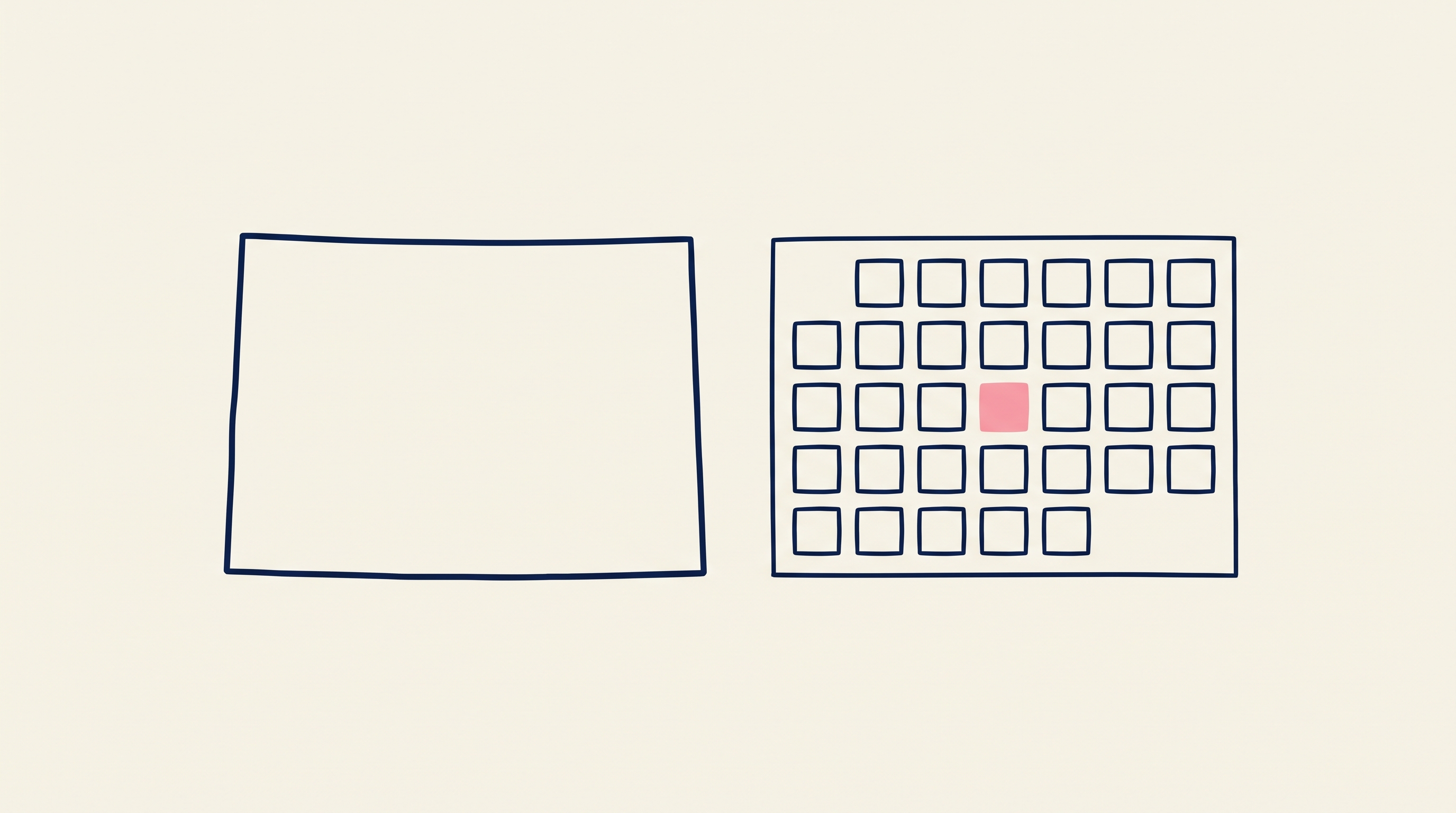
The Rhode Island Cannabis Control Commission reopened its adult-use retail licensing round on August 7, 2026, offering up to 24 licenses — four in each of six geographic zones — with applications due November 23. Buried in a separate schedule is the date that actually governs the equity track: the social-equity certification portal closes at 5:00 pm on Friday, September 11, and the interest form that unlocks it closes Friday, September 4.
An applicant who calendars November 23 and works backward from it has already lost the equity reservation. That is the whole story of this round.
Under R.I. Gen. Laws § 21-28.11-10.2, the Commission "may issue up to twenty-four (24) Adult-Use Retail licenses, with four (4) licenses available in each of the six (6) geographic zones." Section 21-28.11-10.3 reserves one of the four in every zone for a workers' cooperative and one for a social-equity applicant, per the Commission's applicant FAQ (Q66, updated August 21). Selection among qualified applicants is by random selection, not merit ranking (FAQ Q6).
The number 24 is a ceiling, not a promise. In the first, voided round, not every license type drew an application in every zone, leaving regulators able to issue at most 20, according to Rhode Island Current. The same shortfall risk applies now — which is precisely why the reserved seats matter to anyone who qualifies for one.
This round exists because the General Assembly repealed the residency requirement. Governor McKee signed the bills on June 10, 2026, undoing the 2022 Cannabis Act provision that retailers be majority-owned by Rhode Island residents and directing a restart within 60 days. The Commission's FAQ now states plainly: "Applicants are no longer required to be Rhode Island residents or entities with a principal place of business in Rhode Island" (Q1). The prior round had been frozen since U.S. District Judge Melissa DuBose blocked the Commission from holding its planned May lottery and from screening the 97 applications filed by the original December 29, 2025 deadline; a federal ruling on August 17 cleared the way for the new process.
The Commission publishes the application deadline on its licensing page and the certification deadlines on a different page. Read together, the social-equity track runs on this schedule:
That is a 73-day gap between the equity gate and the general deadline. The reservation is nominally protective, but the certification calendar converts it into the tightest deadline in the round — and the applicants it exists to help are the ones most likely to miss it. The Commission also notes its dates "are subject to change," which cuts both ways: do not plan on an extension.
Certified social-equity applicants get real consideration in return. The adult-use retail application fee is waived for approved social-equity applicants regardless of license type (FAQ Q71), a full or partial license-fee waiver can be requested once selected (Q60), and the build-out clock after provisional approval is 12 months rather than the 9 months general and cooperative licensees get (Q18, Q37).
Rhode Island's design — certification first, application second, random selection among the certified — sits between two neighbors that went other directions. New York's Office of Cannabis Management ran an equity-first program that put people with prior New York cannabis convictions at the front of the line; a state judge in Albany enjoined the entire CAURD program on August 7, 2023 after four service-disabled veterans argued the priority scheme had no basis in the statute. Massachusetts, by contrast, runs a standing Social Equity Program whose application window is open again as of September 1, 2026, with fee waivers and exclusive access to delivery and social-consumption license types for majority-owned equity businesses. An operator weighing both markets this month should read our coverage of Massachusetts' 2026 ballot fight, which could reshape that state's retail rules before a Rhode Island licensee opens its doors.
Two other contrasts are worth calendaring. Illinois opened a medical opt-in for existing dispensaries this month, covered in our note on Illinois' medical opt-in — a licensing action for incumbents, not entrants. And New Jersey has moved the opposite way on hemp, pushing intoxicating hemp products into the licensed cannabis channel; our analysis of New Jersey's hemp restrictions shows how a new retail license's product mix can shift under it. Rhode Island's own hemp-beverage rules, in H 6270, and its hemp-derived delta-9 posture are the adjacent rulebooks a new retailer will operate beside. Track the wider state-by-state picture in our multistate policy tracker.
Federal posture matters to the economics of every seat in this round. A Schedule III outcome would change the 280E tax math for a new Rhode Island retailer more than any state fee waiver; see our 280E and Schedule III playbook. The DEA's administrative law judge has not issued a recommended decision as of publication.
| Track | Seats per zone | Gating deadline | Application fee | Build-out clock after provisional approval |
|---|---|---|---|---|
| General adult-use retail | 2 | November 23, 2026 | Payable | 9 months |
| Workers' cooperative | 1 (reserved) | November 23, 2026 (entity must exist to apply) | Payable | 9 months |
| Social equity | 1 (reserved) | Interest form September 4; SEASC September 11, 5:00 pm; application November 23 | Waived for approved applicants; license-fee waiver on request | 12 months |
When is the Rhode Island cannabis license application deadline?
Adult-use retail applications are due November 23, 2026. Social-equity applicants must file an interest form by September 4 and complete certification by 5:00 pm on September 11 to claim a reserved seat.
How many cannabis retail licenses is Rhode Island issuing?
Up to 24 — four in each of six zones, with one seat per zone reserved for a workers' cooperative and one for a social-equity applicant. Fewer may be issued if a zone draws no eligible applicant for a track.
Do I need to live in Rhode Island to apply?
No. The residency requirement was repealed in June 2026, which is why the round restarted. Confirm current eligibility on the Commission's portal before filing.
What is a workers' cooperative license in Rhode Island?
One license per zone is reserved for a worker-owned cooperative. The cooperative must exist as an entity to apply, and it runs on the same 9-month build-out clock as a general licensee.
Can I still apply if I miss the September 11 certification deadline?
Yes, as a general applicant through November 23. You cannot claim the social-equity reservation, the fee waiver or the 12-month build-out clock.
How are Rhode Island licenses awarded?
By random selection among qualified applicants in each zone and track, not by merit scoring, according to the Commission's FAQ.
This is regulatory journalism, not legal advice — talk to your counsel.